

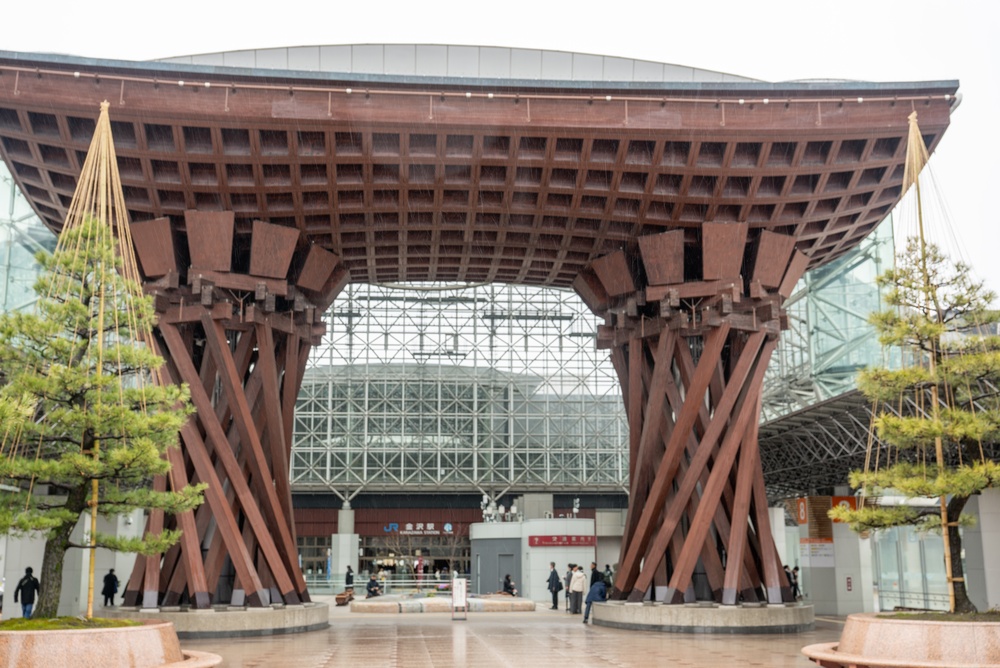
There is a Japan that most visitors never find, along a rugged coast where the Sea of Japan meets the shore and centuries of isolation forged some of the world’s most extraordinary craft traditions. This is Hokuriku: the three-prefecture arc of Toyama, Ishikawa, and Fukui that stretches along Honshu’s northwestern flank. Once requiring a full day’s journey to reach from Tokyo, the opening of the Hokuriku Shinkansen has redrawn the map of Japanese travel, placing this cultural sanctuary just over two hours from the capital. The Hokuriku Shinkansen, a new high-speed train, with top speeds of 160 miles per hour.
Hokuriku’s identity as Japan’s premier craft hub is no accident of geography. It is the legacy of deliberate political strategy. During the Edo period, the Kaga Domain — centered on what is now Kanazawa, the capital of Ishikawa Prefecture. It was the wealthiest domain in Japan outside the Tokugawa shogunate itself. Forbidden by the shogunate from investing in military strength, the Maeda clan channeled their vast rice revenues into the arts. Noh theatre, Kenroku-en garden, Kutani ceramics, Kaga Yuzen silk dyeing, and Kanazawa’s extraordinary gold-leaf industry. The result was a city that survived the Second World War unscathed — it had no strategic military targets — and emerged as one of the few Japanese cities where that Edo-era cultural infrastructure remained intact.
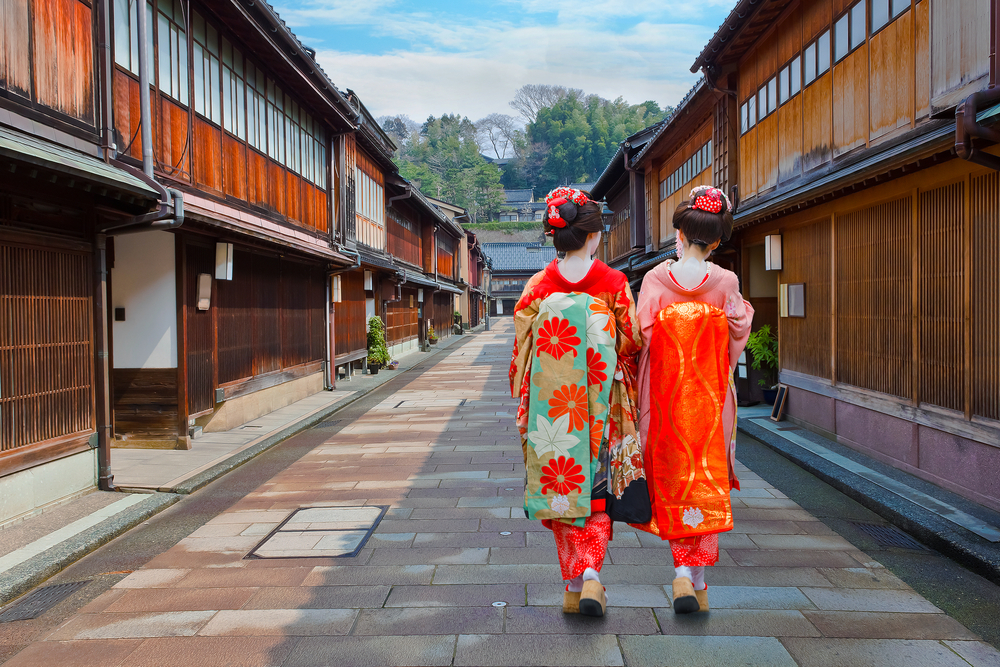
To walk through Kanazawa is to understand immediately why comparisons to Kyoto are so persistent. The Higashi Chaya geisha district, where wooden ochaya teahouses line narrow streets, carries the quiet hum of a living tradition rather than a museum exhibit. Geisha here still perform, still train, and still occupy the upper floors of those latticed facades. Unlike Kyoto’s heavily touristed Gion, Kanazawa’s chaya districts retain an almost private quality — you feel a guest rather than a spectator.
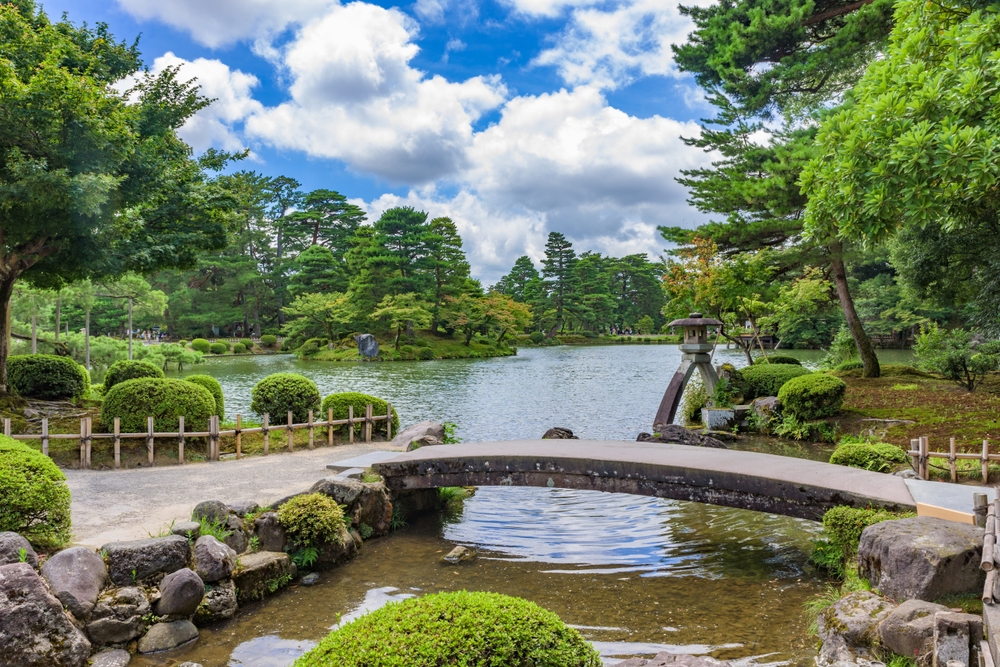
The 21st Century Museum of Contemporary Art, designed by SANAA architects Kazuyo Sejima and Ryūe Nishizawa, offers a striking counterpoint. Its circular, glass-walled structure with no front or back speaks to a democratic philosophy of art — one that has made it among the most visited museums in Japan. Nearby, the Kenroku-en garden, ranked consistently among Japan’s three finest, rewards visitors.
In Toyama Prefecture, it is the landscape that sets the stage. The Tateyama Kurobe Alpine Route traverses a mountain corridor that includes the famous “snow corridor,” where walls of snow can tower twenty metres on either side of the road as late as June. Toyama Bay, meanwhile, is celebrated for its exceptional seafood — particularly firefly squid in spring, which illuminate the bay’s dark waters with bioluminescent blue light, a phenomenon so distinctive it is designated a Special Natural Monument.
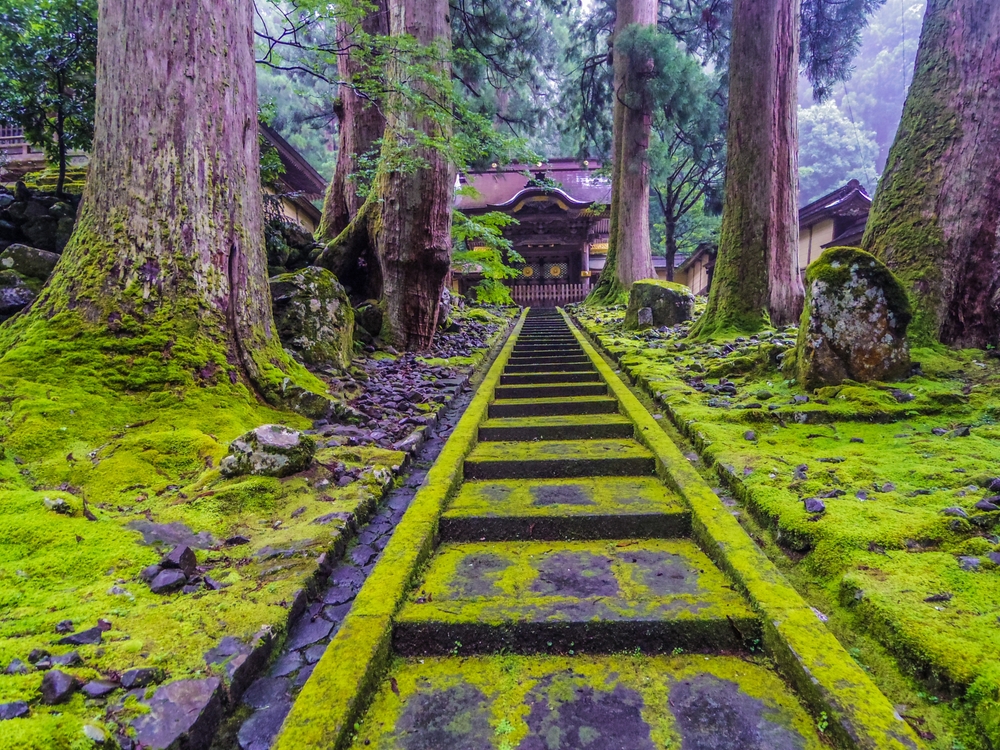
Fukui rounds out the region with a quieter, more introspective character. Eiheiji Temple, founded in 1244 by the Zen master Dōgen, remains an active training monastery for Sōtō Zen priests. Walking its covered wooden corridors — dampened by cedar and candlelight — is among the most contemplative travel experiences Japan offers. The prefecture also harbours the Tojinbo Cliffs, dramatic columns of basalt standing against the Sea of Japan, and a coastline where visitor numbers remain blessedly thin.
Hokuriku operates at a different register. Kanazawa receives a fraction of Kyoto’s international visitors, yet its density of historical and cultural sites rivals cities twice its fame. The Nagamachi samurai district, where earthen walls and stone-lined waterways preserve the spatial logic of Edo-era urban planning, is walkable in near-solitude on most mornings. The Omicho market, a covered market of remarkable vitality, is where locals actually shop. These are not curated tourist experiences. They are the texture of a place that happens to welcome visitors.
Compared to Hiroshima or Nara, Hokuriku requires more from its visitors — more time, more willingness to move between three distinct prefectures — but rewards that effort with a sense of discovery that the heavily-mapped Golden Route can no longer reliably provide. Where Nara offers deer and a famous Buddha, Hokuriku offers a whole civilizational argument: that craft, when practiced with devotion across generations, becomes culture.