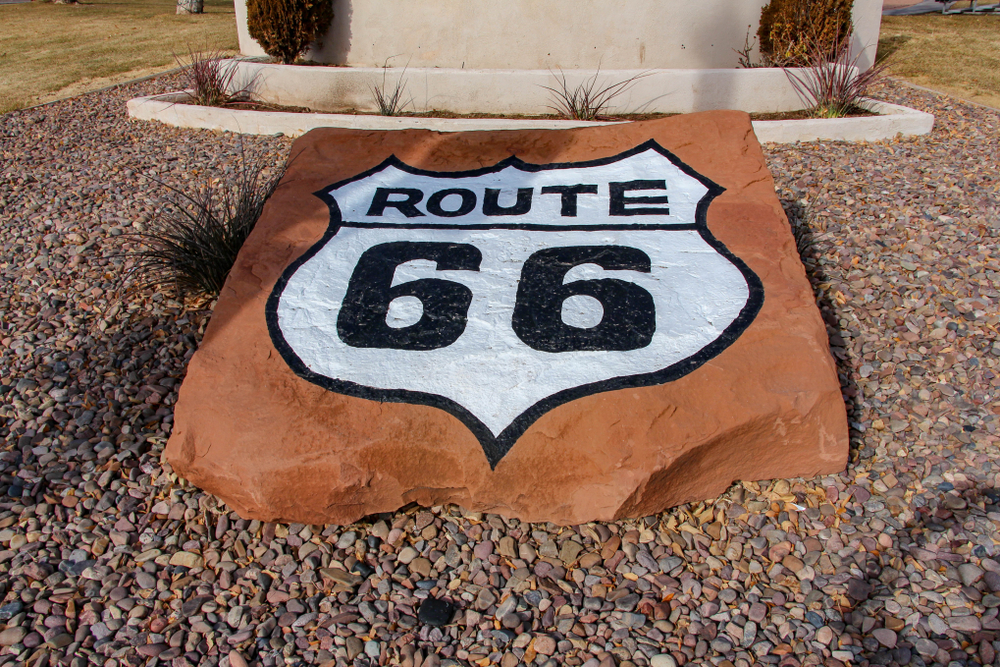
Route 66 embodies the American Dream. From Chicago to Los Angeles, from wide-open plains to scorching deserts and pine forests, this iconic road is integral to the history of the USA. Established in 1926, Route 66 played an essential part in the westward migration of the 1930s. A couple of decades later, the road became famous for its mom n’ pop diners, neon signs, and quirky roadside attractions.
In 1995, the road was decommissioned and was gradually replaced by interstates. Large sections of the original route fell into disrepair. However, many of the towns remain intact, none more so than in Arizona. These days, the I-40 freeway provides easy access to many towns built along the original Route 66, allowing visitors to step back in time and experience the history and culture of the USA’s most famous road.
Holbrook
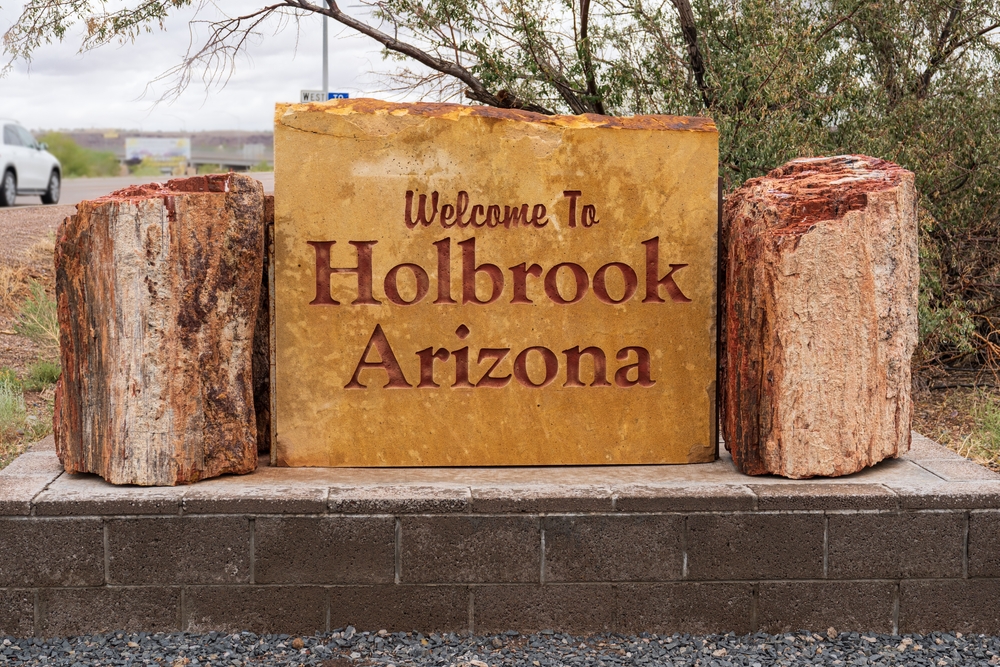
In the early 1900s, Holbrook had a reputation as a lawless cowboy town where outlaws lay low and shootouts occurred on a regular basis. These days, it’s a quintessential Route 66 town. Situated a short distance from the beautiful Petrified Forest National Park, it has a faded charm and numerous reminders of its heyday. Brightly painted trading posts with totem poles at their entrance specialize in Native American crafts. The Rainbow Rock Shop sells rocks, petrified wood, and fossils, but is most famous for the gigantic concrete dinosaurs which stand in front of the store. You can’t miss the pink exterior of Romo’s restaurant, which has a mural of a taco traveling along Route 66. Serving up hearty Mexican food, it’s perfect for breakfast or lunch. At the whimsical Wigwam Motel, which opened in 1950, you can sleep in a cement teepee. The parking lot doubles up as a museum, which displays a range of classic cars, and at night, the motel is illuminated in neon.
Winslow
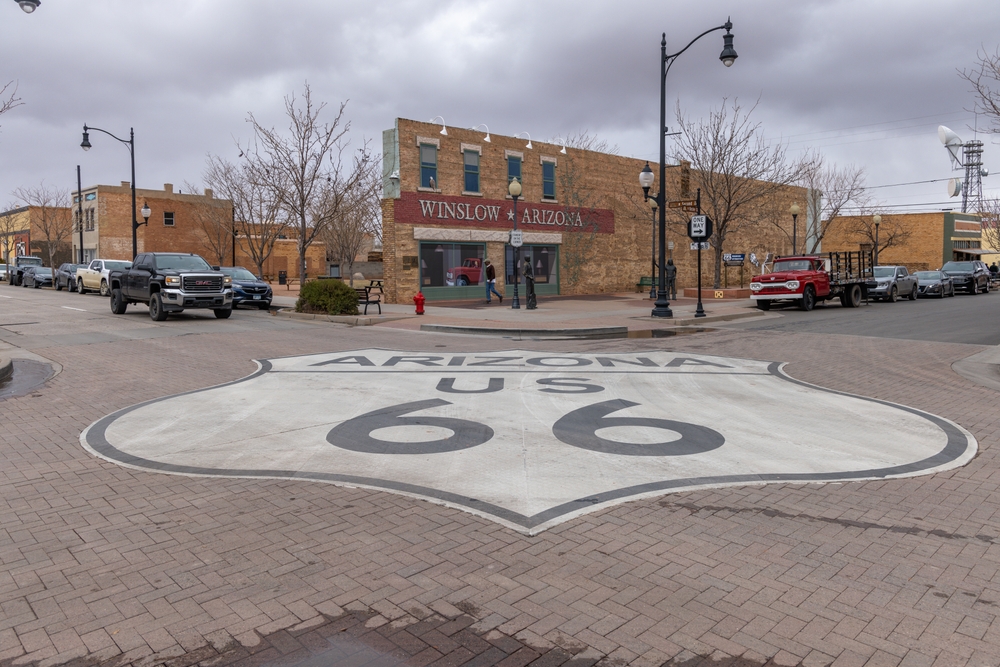
Back in the 1880s, Winslow was a bustling desert town thanks to the railroad, which was a major stop on the journey to the west. When the bubble burst on the golden age of rail travel, Winslow became a sleepy backwater until a certain song revived its fortunes. That immortal line ‘I’m a standin’ on a corner in Winslow, Arizona’ from the song ‘Take it Easy’ by the Eagles, well and truly put the town back on the map. These days, tourists flock to the aforesaid corner on Route 66 to have photos taken with bronze sculptures that resemble the songwriters, Glenn Frey and Jackson Browne. A tromp-l’oeil mural of a flatbed ford by artist John Pugh, is painted on the wall behind them. The downtown area is tiny, but there is a smattering of Route 66 souvenir shops and restaurants surrounding the famous corner. A short stroll along the road takes you to La Posada, an elegant historic hotel that is located adjacent to the railway line. Opened in 1930 for travelers keen to explore the delights of the southwest, it has an art gallery, restaurant, and an excellent shop selling an array of local art, crafts, and books.
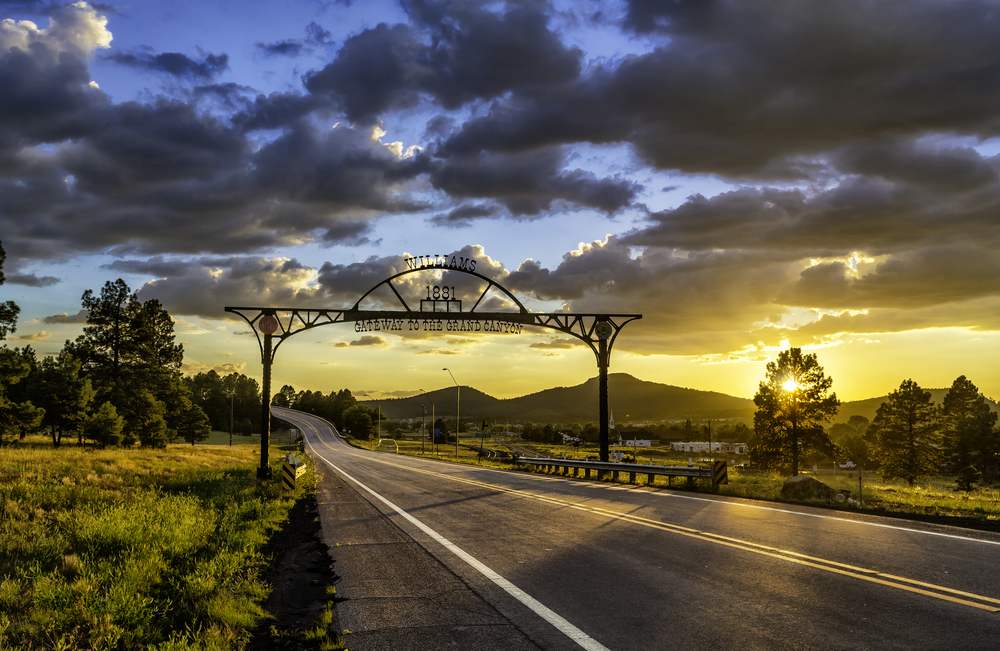
Williams
Founded in the late 1800s by railroaders, ranchers, and loggers, Williams sits at 6,770 feet and is nestled amongst the pine trees of the Kaibab National Forest. Today, it’s a popular base for visitors who hop onto a vintage train that transports them to the south rim of the Grand Canyon. The main drag of Williams is lined with shops with such evocative names as Thunder Eagle Native Art, Turquoise Teepee, and Colors of the Southwest. A fifties-style gas station houses the Route 66 Museum and Gift Shop, which is crammed with treasures from a bygone era. If you’re in town, be sure to check out the Sultana Bar, an atmospheric watering hole where locals and tourists mingle. Dating back to 1912, the bar is built on underground tunnels used for bootlegging back in the day. With a gigantic moose head on the wall and a profusion of Route 66 paraphernalia, there’s a lot to take in as you sip on your beer. Another historic building is The Red Garter, a former brothel. These days, it’s a bed-and-breakfast and is believed to be haunted by the ghost of a Hispanic woman.
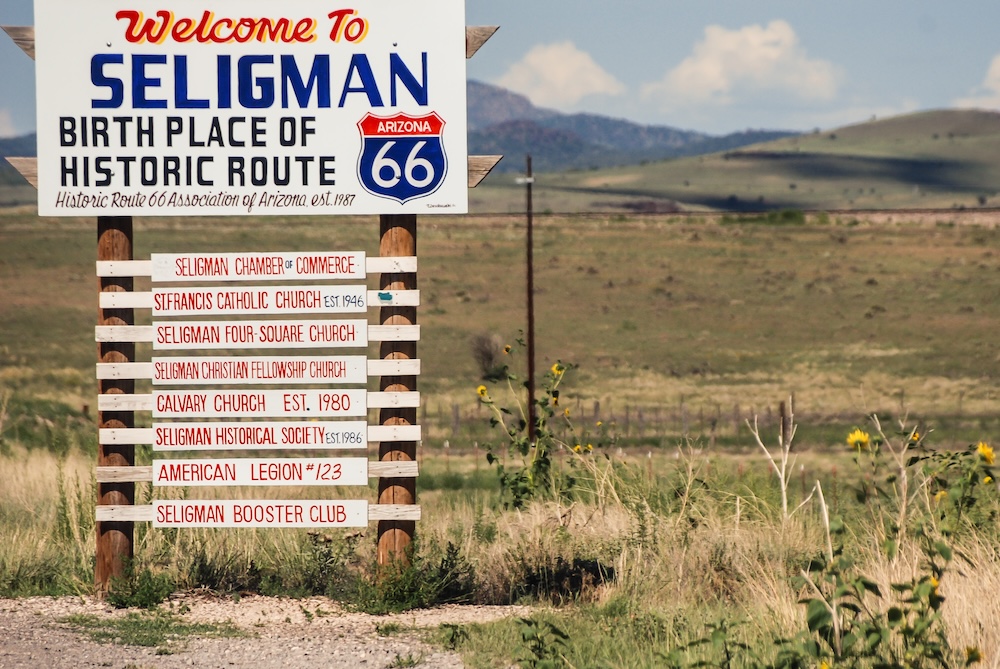
Seligman
It may be small, but Seligman packs a punch with its attractions. Known as the birthplace of Route 66, it makes for a fun stop. Existing entirely for the delight of tourists, it has a bounty of kitsch attractions situated within a small area of one another. From retro signs to a variety of cool vehicles, Seligman is a feast for the eyes for Route 66 enthusiasts. Many of the buildings are vibrantly painted and adorned with everything from aliens to teddy bears. A VW camper van covered in stickers is parked in front of the Copper Cart Motoporium, and don’t forget to pay a visit to the Route 66 Hippie Cricket Antique Store. If you’re in need of sustenance, indulge in some classic American fare at the Snow Cap Drive-In Diner, where hot dogs, burgers, and shakes are on the menu. Seligman is the first stop heading west to Kingman on the most uninterrupted section of Route 66. As you journey towards Kingman, make sure you call in at the legendary Hackberry General Store and make a stop at Giganticas Headicus, the 14-foot-tall green tiki head.
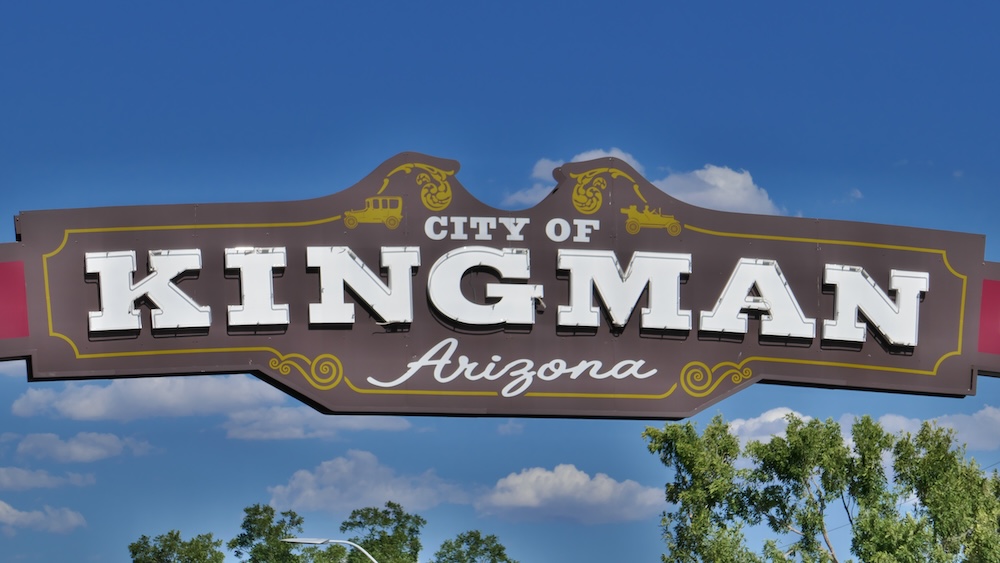
Kingman
Kingman, another railway town, was founded in 1882 and is situated in Arizona’s high desert. The Powerhouse Building in the heart of downtown is home to The Route 66 Museum. The well-presented museum traces the stories of those who journeyed west during the Dust Bowl Era and explores how the highway shaped the development of the southwest. If there’s only one Route 66 Museum you visit, make sure it’s this one. At the entrance to the parking lot, a Route 66 drive-through neon sign provides an ideal photo opportunity for road-weary car travelers who have made it as far as Kingman. The Mohave Museum of History and Arts is also worthy of a visit, and train aficionados will love the Kingman Railroad Museum. Eye-catching Mr D’s Route 66 Diner is a popular spot to enjoy a meal or tasty dessert. The diner makes its own ‘old-fashioned’ root beer served with ice cream in a frosted mug – a refreshing treat after wandering around town under the heat of the desert sun.
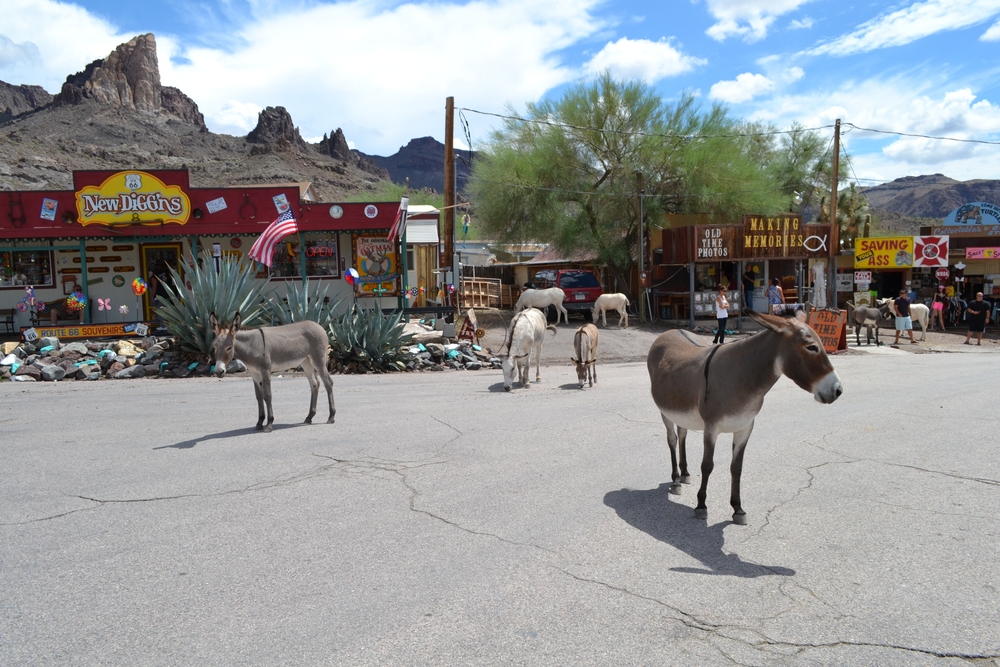
A wild west gold mining town, Oatman became a magnet for prospectors who hoped to ‘get lucky’ back in the early 1900s. Getting to Oatman is an adventure in itself – narrow roads featuring numerous switchbacks wind their way through the Black Mountains on Route 66. Burros, thought to be the descendants of those used by the original gold-diggers, wander through the quaint town. With its wooden sidewalks and ghost town vibe, there are plenty of curio shops and intriguing little museums to dip into. The historic Oatman Hotel has oodles of character and is apparently where Clark Gable and Carole Lombard spent their wedding night after marrying in Kingman. Dollar bills are pinned to the walls, and donkeys poke their heads into the restaurant to say howdy. Twice a day, Route 66 is brought to a standstill for a shoot-out between the Ghost Rider Gunfighters and Red Ridge Marauders. It’s an entertaining glimpse into the bygone days of the wild west, and all donations go to local charities.