

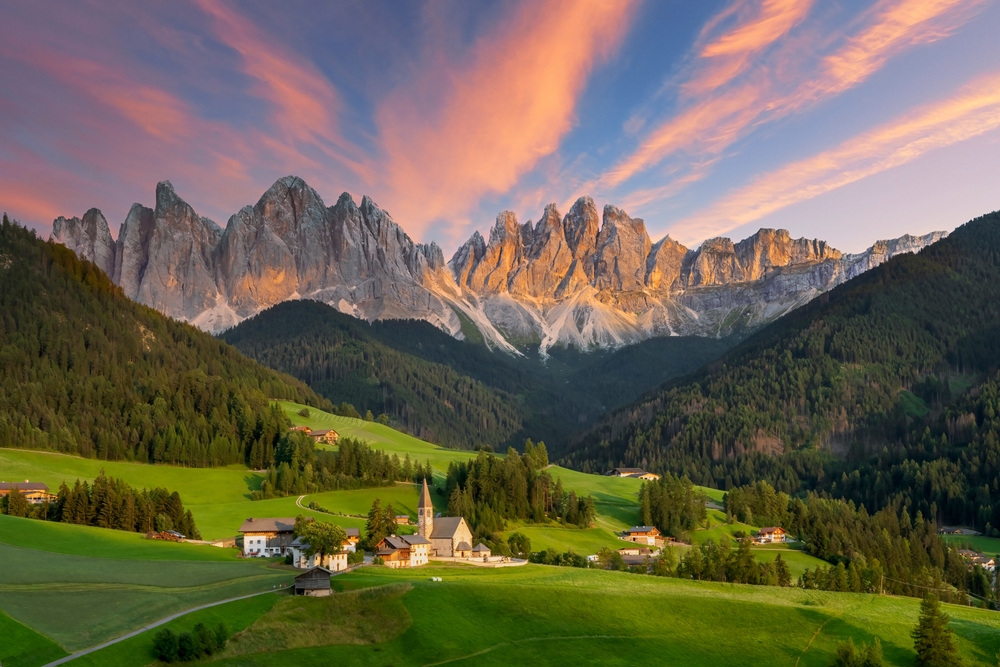
The Dolomites are no doubt one of Europe’s most dramatic mountain landscapes. Beyond their UNESCO-recognized geological splendor, however, lies an equally fascinating cultural story—one in which Austrian Gemütlichkeit (snugness) meets Italian dolce vita, and an ancient Romance language you may never have known about persists in five high valleys.
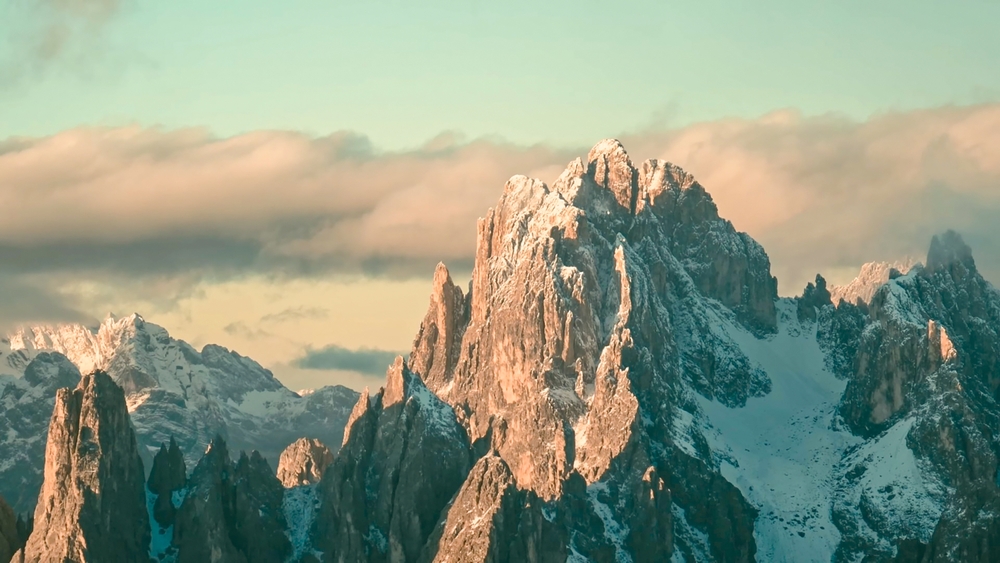
The Dolomites sprawl across five provinces—Bolzano, Trento, Belluno, Udine, and Pordenone—covering approximately 350,000 acres of vertical walls, narrow valleys, and jagged peaks that reach above 10,000 feet. When UNESCO designated these mountains as a World Heritage Site in 2009, the committee recognized not only their extraordinary beauty but also their geological significance. Many of the rock cliffs there contain some of the finest-preserved Mesozoic carbonate platforms on Earth, providing crucial evidence of marine life’s recovery following the planet’s greatest extinction event. The distinctive pale dolomite limestone—named for 18th-century French geologist Dolomieu—shifts from pure white to fiery red during the phenomenon locals call enrosadira, when sunset transforms the peaks into glowing sculptures.
The Keepers of Vulgar Latin
In five valleys encircling the Sella massif, approximately 30,000 people speak Ladin, a Rhaeto-Romance language that traces its lineage directly to the Vulgar Latin spoken by Roman soldiers and settlers who conquered these mountains in 15 BC. When the Romans subdued the indigenous Rhaetian tribes, their everyday Latin merged with native Celtic and Rhaetic tongues to create what linguists now classify as one of Europe’s rarest languages. It is spoken nowhere else.
The Ladin people—an ethnolinguistic minority with their own cultural institutes, museums, and even a weekly newspaper—maintain distinct dialects in Val Badia, Val Gardena, Val di Fassa, Livinallongo, and Cortina d’Ampezzo. Each valley’s variant differs sufficiently that neighboring communities struggle to understand one another, yet all share roots in that ancient Roman foundation. In Val Badia and Val Gardena, where Ladin enjoys official recognition alongside Italian and German as South Tyrol’s third language, trilingual signage is posted on every road, and children study in all three languages at school. Recent genetic studies suggest that modern Ladins may carry distinct DNA markers that link them to pre-Roman Alpine populations, making them not merely a linguistic community but a distinct ethnicity.
A Border That Moved Mountains
The Dolomites’ dual cultural identity stems from centuries of Austrian rule. From 1323 until the conclusion of World War I in 1918, these mountains were part of the Habsburg Empire. German-speaking communities flourished here, building Alpine farmhouses, establishing traditions, and creating a culture distinct from that of Mediterranean Italy. When the Treaty of Versailles transferred South Tyrol to Italy following WWI, it split territories that had shared borders for six hundred years.
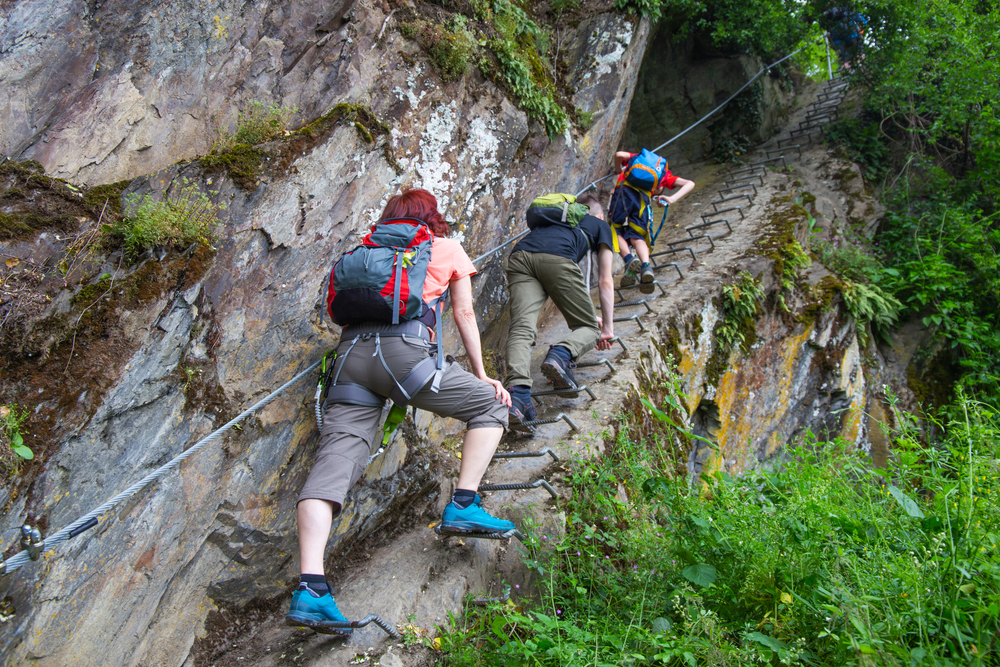
The Italian-Austrian front line carved through these peaks from 1915 to 1917, leaving behind a brutal legacy. Soldiers fought not just each other but altitude, avalanches, and temperatures that killed twice as many men as bullets. Today’s protected climbing paths, known as via ferrata, originated as military routes, with Italian troops installing permanent cables and ladders into vertical faces to move equipment through otherwise impassable terrain. Open-air museums at Cinque Torri, Monte Piana, and Lagazuoi preserve trenches, tunnels, and artillery positions as stark reminders of mountain warfare.
This Austrian heritage persists most visibly in South Tyrol’s architecture, cuisine, and language. Traditional Dirndl and Lederhosen appear at festivals. Menus list Knödel (bread dumplings), Speck (smoked ham), and Strudel alongside Italian pasta. Many residents speak German as their first language, creating what travel expert Rick Steves describes as the place “where Austria meets Italy.” The Ladin turtra—a spinach-and-curd-filled doughnut—perfectly embodies this cultural fusion, blending Alpine and Mediterranean influences into something entirely unique.
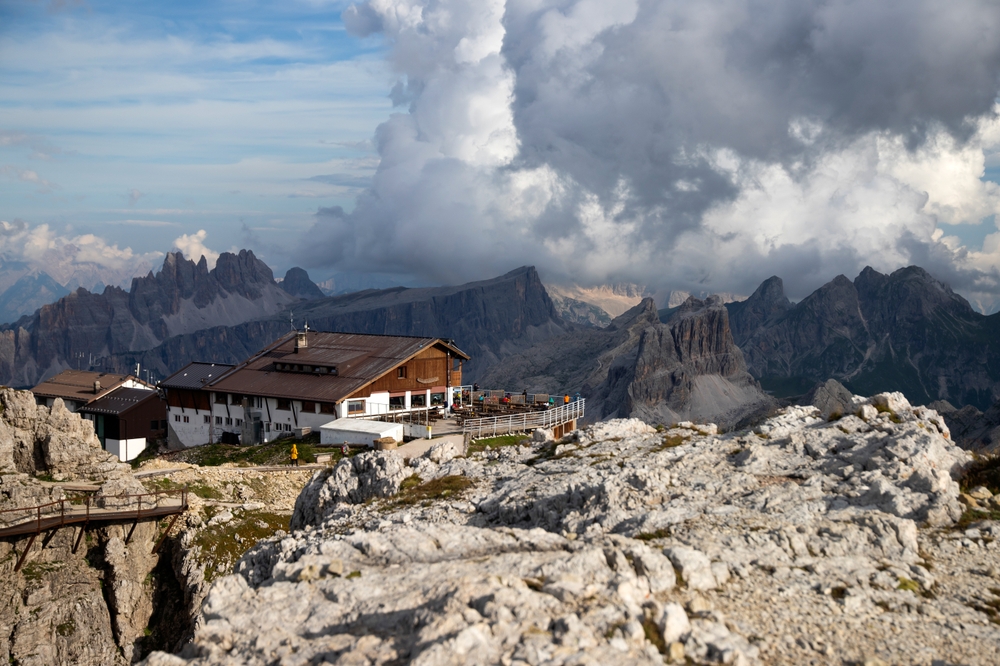
The Dolomites support year-round recreation. The summer hiking season runs from late June through September, when all mountain Rifugio (shelters or refuges) open and high-altitude trails are clear of snow. More than 130 via ferrata , ranging from beginner-friendly to expert-level, provide access to otherwise unreachable peaks via fixed steel cables, iron rungs, and suspension bridges. Multi-day hut-to-hut treks along numbered alte vie (high routes) traverse entire mountain groups, with shelters serving traditional meals and providing overnight accommodation at elevations exceeding 8,000 feet.
Winter transforms the region into a skiing paradise. The Dolomiti Superski network connects 450 lifts and 750 miles of slopes across twelve valleys, making it the world’s largest ski area. Cortina d’Ampezzo, which hosted the 1956 Winter Olympics and co-hosted the 2026 Winter Games with Milan, anchors the region’s winter sports reputation.
High season spans mid-July through August, when European school holidays bring crowds, full rifugi, and premium prices. Mid-August’s Ferragosto—Italy’s traditional holiday period—represents peak congestion. Early September offers optimal conditions: stable weather, golden larch trees beginning their autumn transformation, and 60-70 percent fewer visitors after September 15th.
November and April constitute shoulder seasons when most facilities close between hiking and skiing operations. December through March delivers consistent snow for winter sports, while late September through mid-October showcases spectacular autumn colors as thousands of larch trees turn brilliant gold against pale limestone—though visitors should expect some rifugi and cable cars to have closed for the season.
In these mountains where ancient Latin evolved into Ladin, where Austrian traditions blend with Italian culture, and where geological time scales meet human history, the Dolomites offer more than postcard scenery. They preserve a living cultural crossroads two millennia in the making.