

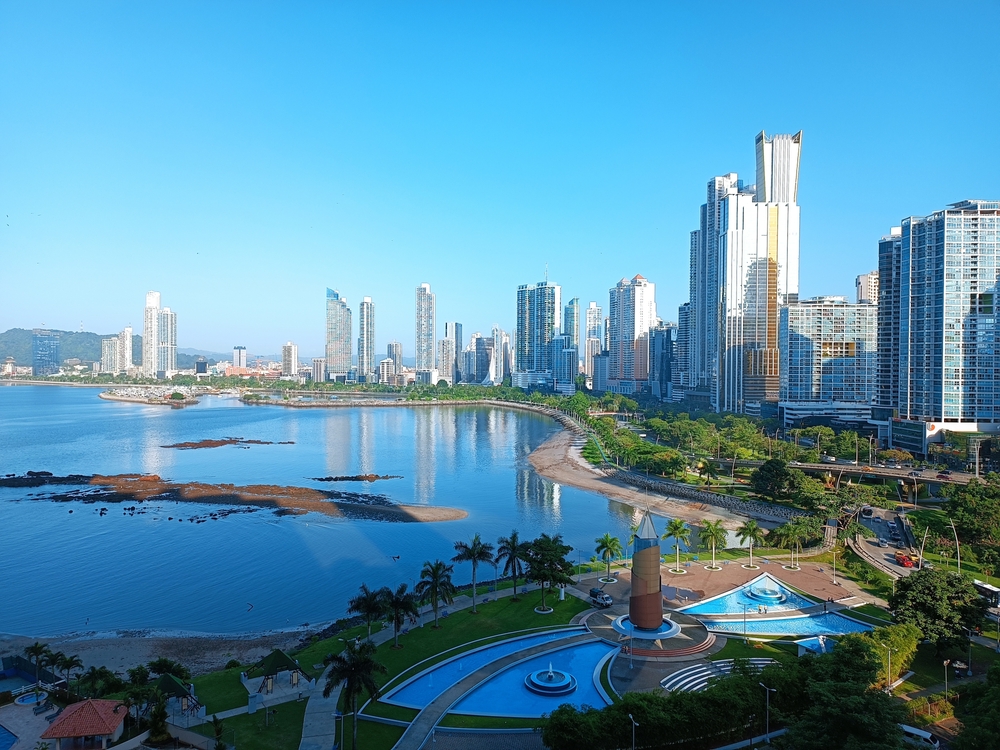
Exciting news – I’ve found a country I like so much that I’m planning to return time and time again.
After a wonderful week in Panama, I’m already itching to go back for more exploring. It’s got exactly what I’m looking for in a holiday, all in such a compact place that you can do everything almost instantly. If you want a beach, there are some tiny Caribbean islands with turquoise water and only a handful of other guests. There’s the jungle, with sloths and monkeys to spot and hikes into undisturbed wildness. If history and culture are your thing, Panama City has a gorgeous Spanish colonial centre and a string of museums. Interesting things to see? Of course, the Panama Canal is one of the world’s most ingenious feats of engineering. Swanky hotels with big swimming pools and Pina Coladas? By the dozen.
Plus an excellent transport system in the city, a touch of adventure in more rural areas, steamy hot weather, and, apparently, good healthcare too. Now I understand why Panama regularly tops the lists of ‘the world’s best places to retire to.’ In fact, in the mountain town of Boquete, almost a quarter of the population is said to be US retirees.
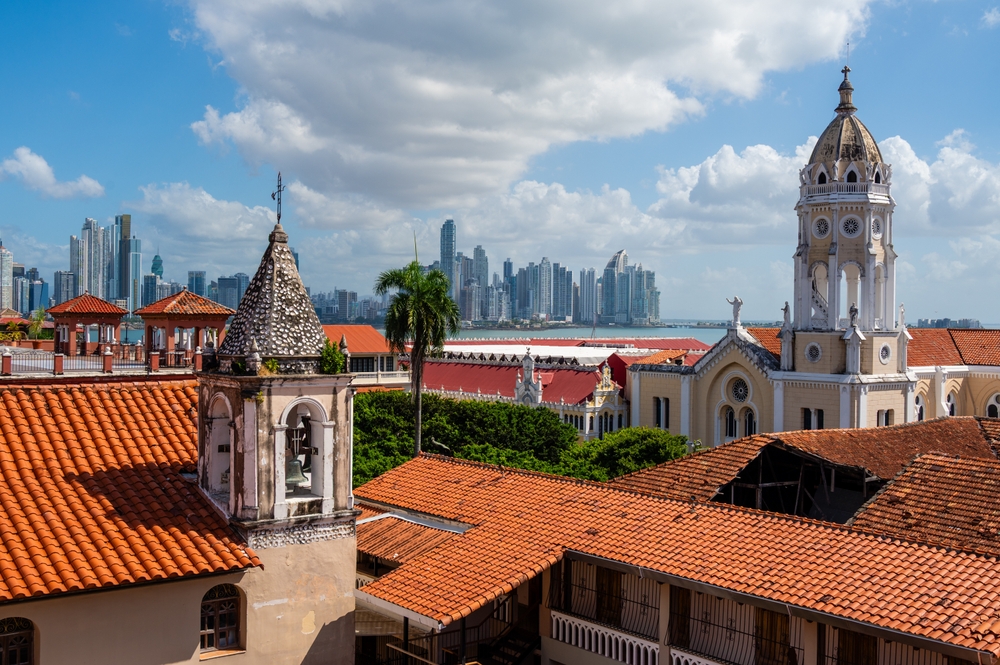
Panama is a tiny S-shaped country about 480 miles long and between 37 and 110 miles wide. What makes it so important – and economically vibrant – in global terms is its key position as the link between North and South America. Everything in Panama changed when the canal was built as a shipping shortcut between the Pacific and Atlantic Oceans. That US-led project brought in workmen from various countries, who stayed to create its eclectic population.
The landscape itself changed when a mountain range was flooded to create Lake Gatun, which the container ships navigate to cross the country between a staircase of locks at both coastlines. Investments flowed in, turning Panama into a financial centre boasting the most skyscrapers in Latin America.
Its efficient airport is a major transportation hub, and the national airline Copa tempts tourists to stay by offering stopovers for up to seven days without increasing the airfare. From the airport, two subway connections took me to my downtown hotel for about $1.50. Two hours after landing I was in the pool, gazing up at the stars and ordering from the poolside bar.
The next afternoon I took a trip to Lake Gatun to see the monkey islands and enjoy a short forest hike to a waterfall. Our guide, Mario, was excellent, explaining the history of Panama, spotting a sloth high up in the trees, and luring howler, capuchin, and tamarin monkeys onto our boat for some up-close encounters.
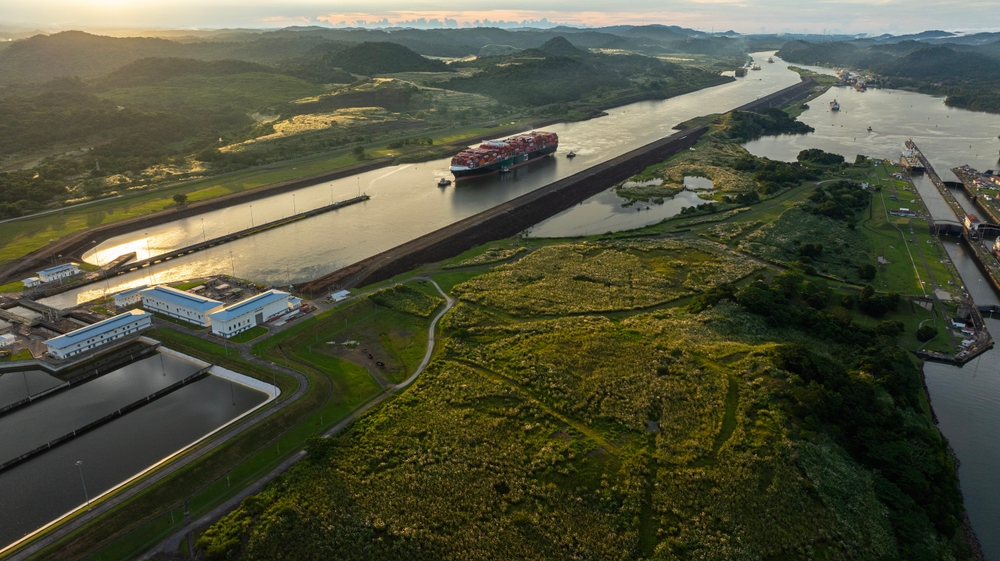
To see the canal in action, I took a bus to the visitor centre at Miraflores Locks, where ships enter or leave Panama on the Pacific coast. It’s a painstaking process that the commentators explain in both Spanish and English. The ships relinquish control to a Panamanian captain, then they’re attached to powerful ‘mule’ like trains on either side of the canal to keep them straight as they enter the locks. It’s a real art, with only a yard of clearance for the widest vessels. When the water is drained out of the lock chamber, the ships are lowered to the level of the next lock, and eventually they’re lowered 85 feet back down to sea level.
There’s a museum dedicated to the canal in Casco Viejo, the historic centre of the city, but as an engineering dunce, I’d already absorbed enough. There was plenty more to enjoy just by strolling around the picturesque colonial streets, popping into a couple of churches dating back to 1675, sitting in shady plazas, and admiring the skyscraper skyline across the bay.
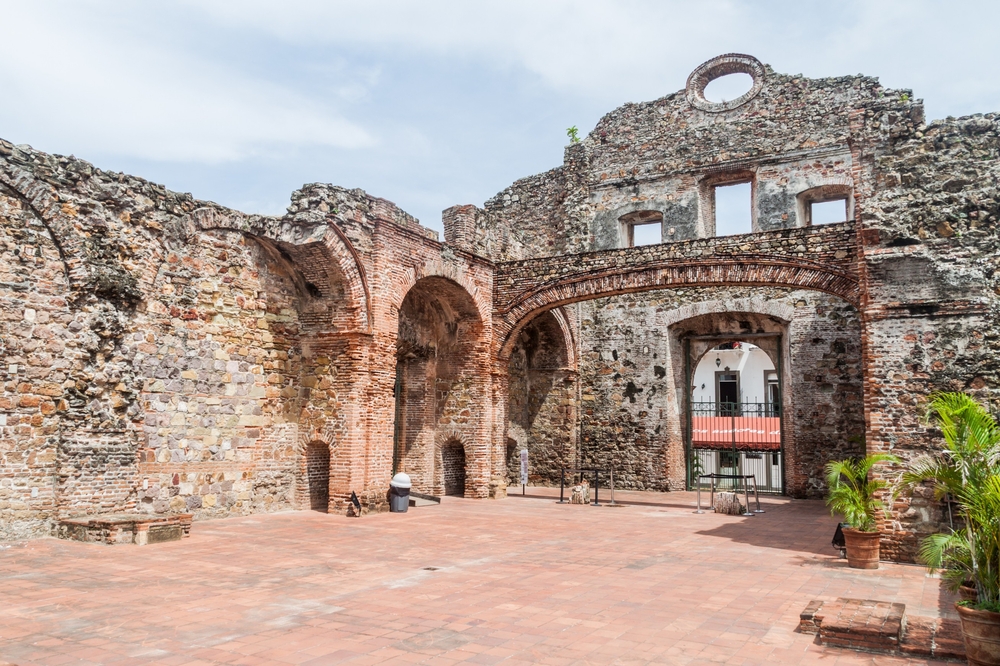
Panama’s capital was first established way back in 1519, but it was destroyed in 1671 by the pirate Henry Morgan. The King of Spain ordered a new city to be built, and work began in 1673. Over the centuries, some of the buildings have fallen into ruin, but a decade-long restoration project was recently completed on five churches, including the Cathedral, San Francisco de Asis, and San Jose, with its golden altar.
Another fascinating way to spend a day is to catch a bus along Amador Causeway, a narrow strip of land that culminates in Mirador Flamenco, where ferries depart for some islands in the Pacific Ocean. I just went for the bus ride, with stunning views on both sides and the excellent Biomuseum in the middle. The museum has touchy-feely exhibits that explain how the country developed, its different biomes, and the plants and animals that live there. It also boasts an affordable cafe with great views over the bay.
What Panama City doesn’t have is a beach, so for some sandy downtime, I booked a two-day trip to San Blas, a string of islands run by the indigenous Guna population. My pickup arrived at 5 am to take me across the country to the Caribbean coastline. The road winds through the Guna Yala mountains, with countless switchbacks over spectacular scenery. I was dropped off on a patch of land that meets the Guna Yala Gulf, and a local boatman steered me and some other visitors over to Yansailadup Island. The entire island is small enough to walk around in maybe 30 minutes, with a handful of chalets on stilts above the water, a long hut divided into bedrooms, a communal dining area, a toilet block a 2-minute walk away, and a separate area where the host family sleeps.
I arrived on Christmas Eve for the thrill of waking up on a Caribbean island on Christmas Day, and it was a brilliant plan. There’s nothing to do but read, sunbathe, and swim, but the hosts excelled themselves with a turkey and ham feast. A couple of expat boat-dwellers moored up too, with one of them recalling how these islands were almost deserted until tourism caught on a few years ago. The trip included a boat ride to the slightly larger Misdup Island, but plans to snorkel were scuppered by a lack of the promised equipment. As the trip notes, with their long disclaimers, made clear, the San Blas islands are neither sophisticated nor luxurious, and things may not work as expected.
I didn’t much care. When I was ready for air conditioning, a hot shower, and slick waiter service again, I had it back in Panama City.