

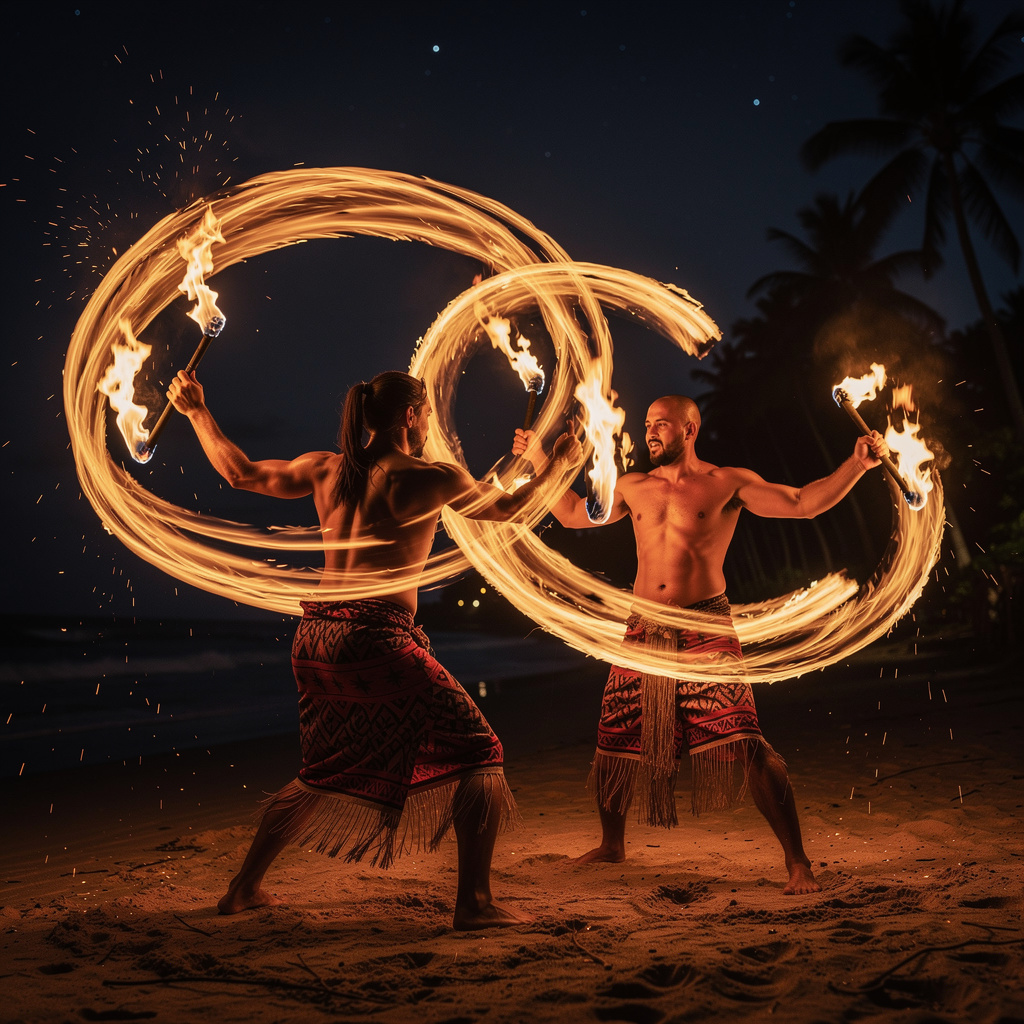
The drums start before the light is fully gone. On Kauai’s north shore, dusk does not so much fall as get absorbed; the sky over Kilauea falls dark while a line of torches gets lit along a gravel path. Somewhere behind the stage, dark and enormous against what’s left of the light, sits a mountain the old Hawaiians called Makana and the movies renamed Bali Hai. Nobody on stage mentions the second name. They don’t need to. Everyone in the folding chairs already knows it from a musical their grandparents watched.
This is Ahi Lele, “leaping fire,” “fire-knife” or “dancing fire,” depending on who’s translating, and it happens on 46 acres called Common Ground, a former guava plantation in Kilauea that was, at one point, reportedly the largest of its kind in the world. Guava gave way decades ago to a working farm and community nonprofit, the kind of place that grows its own breadfruit, banana, and mountain apple and then serves them to you an hour later. Dinner happens first, in a converted dining hall the staff calls the Kitchen Table, before guests walk a dimly lit, occasionally muddy path uphill to a canopy-covered stage ringed with picnic tables and battery candles. It is not a subtle transition going from dining room to hillside amphitheater, cutlery to firelight, and that’s somehow a part of the appeal.
The meal itself splits the difference between farm dinner and luau, and which version you get depends on what you paid for. The higher tier runs closer to a tasting menu: raw ahi cured with guava-smoked Hawaiian sea salt, a shrimp and heart-of-palm plate finished with coconut and chili, slow-roasted pork from Kaneshiro Farms tucked into taro and luau leaf, and a coconut milk panna cotta set alight with flambéed pineapple and local rum. The general-admission plate is friendlier and less composed, consisting of kalua pork, teriyaki chicken with pineapple, macaroni salad, rice, just the kind of spread you’d find at any backyard gathering on the island. Cocktails on both tiers lean hard into geography: Ocean Vodka from Maui, Koloa rum distilled a few miles down the road, beer brewed somewhere between the two islands. It is a meal built to remind you, gently and repeatedly, that you are on Kauai and not somewhere pretending to be.
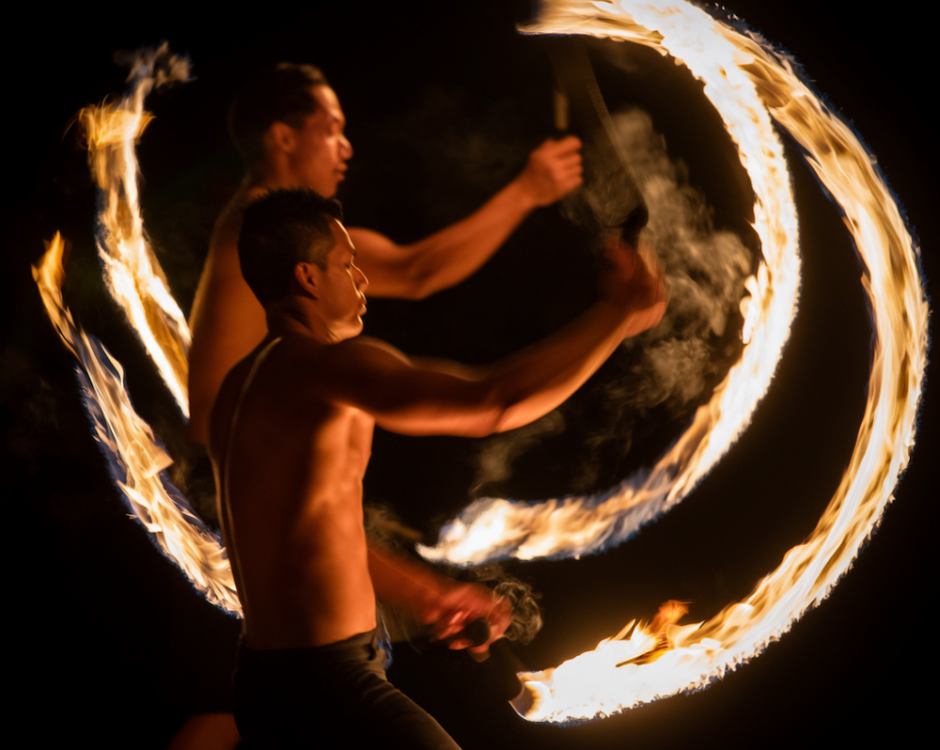
What follows the meal is what gives the evening its name. The show’s centerpiece, the fire knife dance, did not originate on this island, and the performers say so before they light anything. It began in Samoa sometime between the ninth and thirteenth centuries as ailao, a war dance performed with a carved wooden club called an anava, with sharp turns and mock strikes meant to display a warrior’s readiness before battle. As actual warfare receded, the choreography survived by attaching itself to ceremony: the nifo oti, a bladed wooden knife, became part of the ta’alolo, a formal gift-giving procession led by a village’s highest-ranking dancers. The fire is a relatively recent addition, and the story behind it has the flavor of an accident rather than a tradition. In 1946, a Samoan performer named Uluao Letuli, working in San Francisco, reportedly watched a Hindu fire-eater’s act and decided the knife dance could use exactly that. He was right, and the version of ailao most audiences now watch, flaming at both ends, spinning past faces and bare feet, is younger than most of the people who perform it tonight.
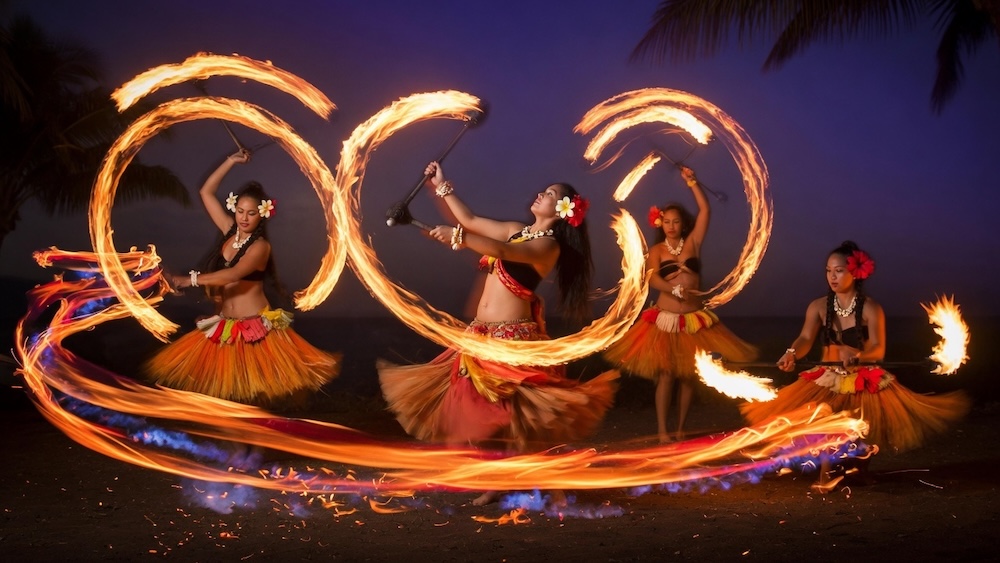
The meaning beneath the choreography, according to the performers who narrate the show between acts, has less to do with combat and more with fear. The Samoan piece is framed as a story about a people who were once afraid of fire and lava and danced their way past that fear rather than around it. The Hawaiian fire-walking segment draws from a different well: chants historically addressed to volcanoes, to the idea of fire as something to be spoken to directly rather than simply feared. Whether every gesture on stage carries a literal, one-to-one translation is the kind of question a folklorist could spend a career on. What’s observable at a picnic table is simpler: the dancers move as if negotiating with something, not performing a trick for its own sake.
And then there’s the mountain, which the show gestures toward more than it explains. Makana was once the site of oahi, a firebrand ceremony reserved for Hawaiian royalty. Men climbed to the summit at night, lit long wooden spears, and hurled them out over the cliff into the trade winds, which caught the burning shafts and carried them, arcing and smoldering, over the ocean below. Spectators in canoes tried to catch the falling embers as they fell — catching one was considered a mark of honor, and some who succeeded marked themselves with it permanently, burning the ember into their own skin as a tattoo. Queen Emma reportedly watched the ceremony performed in 1860. Ninety-seven years later, a film crew arrived, pointed a camera at the same cliff, and gave it a new name that stuck. Locals still call it Makana. Everyone else asks where Bali Hai is.
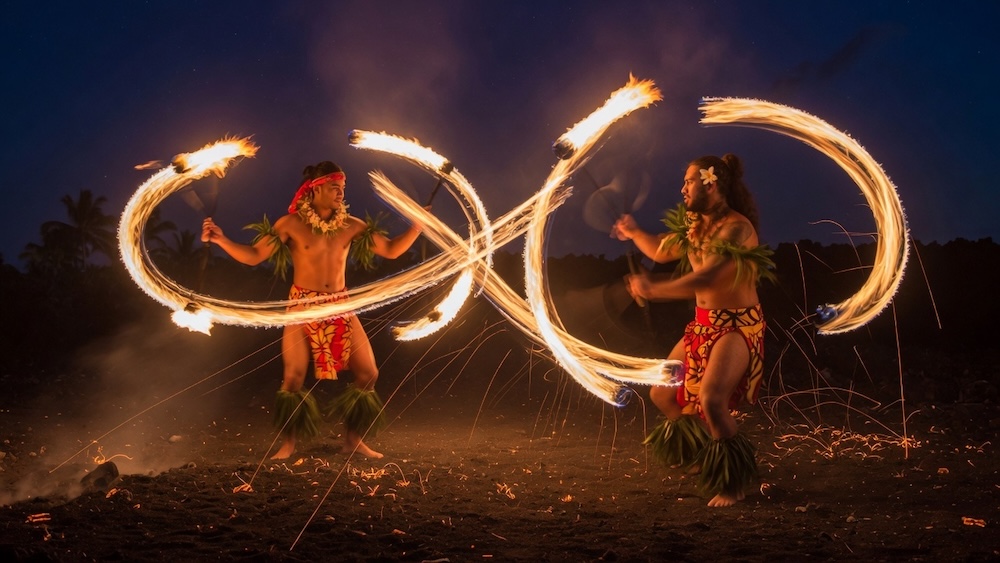
The instruments carrying all of this are mostly percussion, with pahu-style drums and Tahitian log drums played in a staccato that the drummer, a longtime local performer, keeps shifting mid-song without warning, so the dancers’ footwork has to track him rather than the other way around. Somewhere in the mix, usually during a quieter interlude, comes the reedy, breathy note of a Hawaiian nose flute, played exactly how it sounds, through the nose, not the mouth, which draws the evening’s one collective laugh before the drums pick back up and the next dancer walks out already burning.
By the time the last knife goes dark, the mountain behind the stage has disappeared entirely into the night, visible only as an absence of stars. Nobody claps for the mountain. But it’s hard to shake the feeling that it’s still the one running the show.