




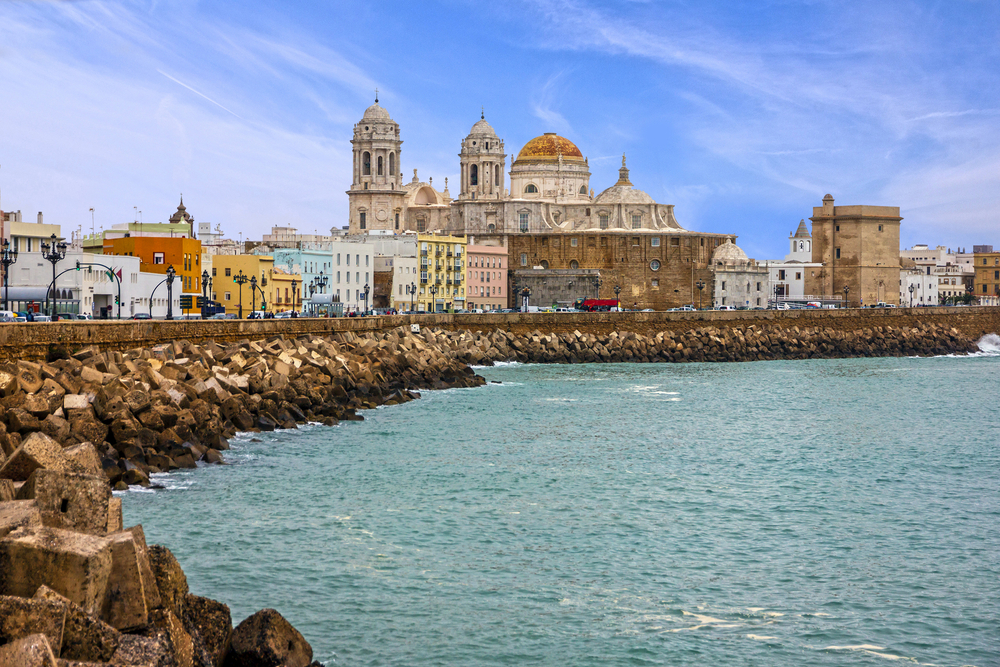
Wrapped by the sea on three sides and claiming three millennia of continuous habitation, Cádiz stands as Western Europe’s oldest city—yet it remains one of Spain’s most underappreciated destinations. While masses descend upon Barcelona and Seville, this Andalusian port city maintains an authenticity that has become increasingly rare along heavily touristed Mediterranean coasts. Here, the Atlantic crashes against Phoenician foundations, baroque churches rise above faded colonial facades, and the smell of fried fish drifts through narrow streets where locals still vastly outnumber visitors.
The city’s singular geography defines much of its character. Built on a narrow peninsula that barely connects to the mainland, Cádiz feels more like an island than a conventional coastal city. The Atlantic surrounds it on nearly all sides, creating a maritime atmosphere that permeates daily life. Unlike resort towns purpose-built for tourism, Cádiz functions as a genuine working city where cruise ships share the harbor with commercial vessels, and beach days conclude with locals gathering at neighborhood bars rather than retreating to hotel complexes.
This oceanic setting shaped Cádiz’s historical importance as Spain’s primary port for trade with the Americas during the colonial era. That wealth funded the baroque and neoclassical architecture visible throughout the old town, while the resulting cultural cross-pollination left lasting marks on local traditions, cuisine, and the city’s notably cosmopolitan character for its size.

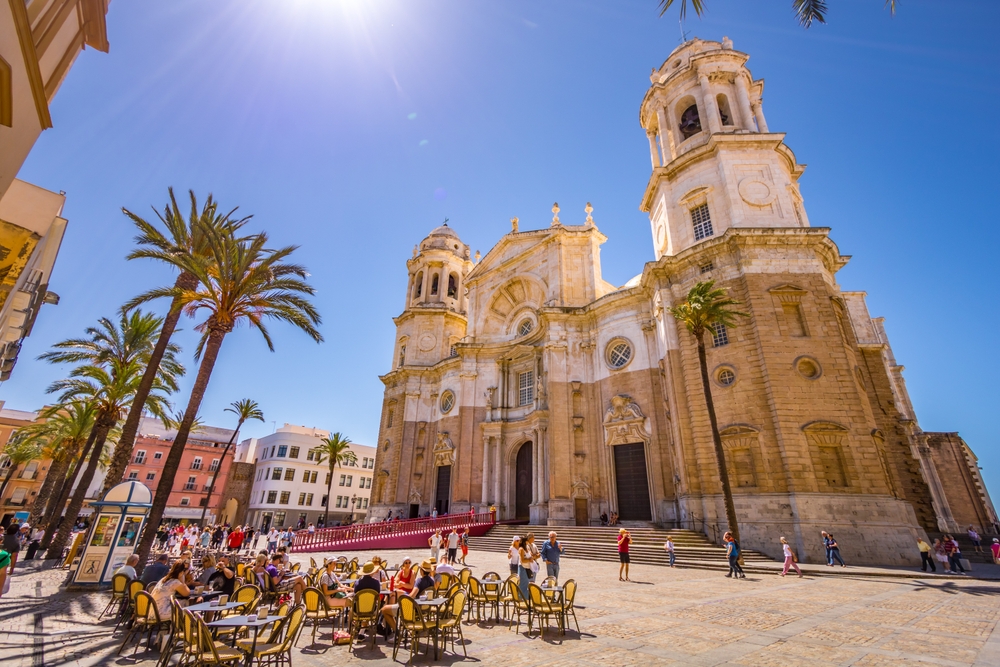
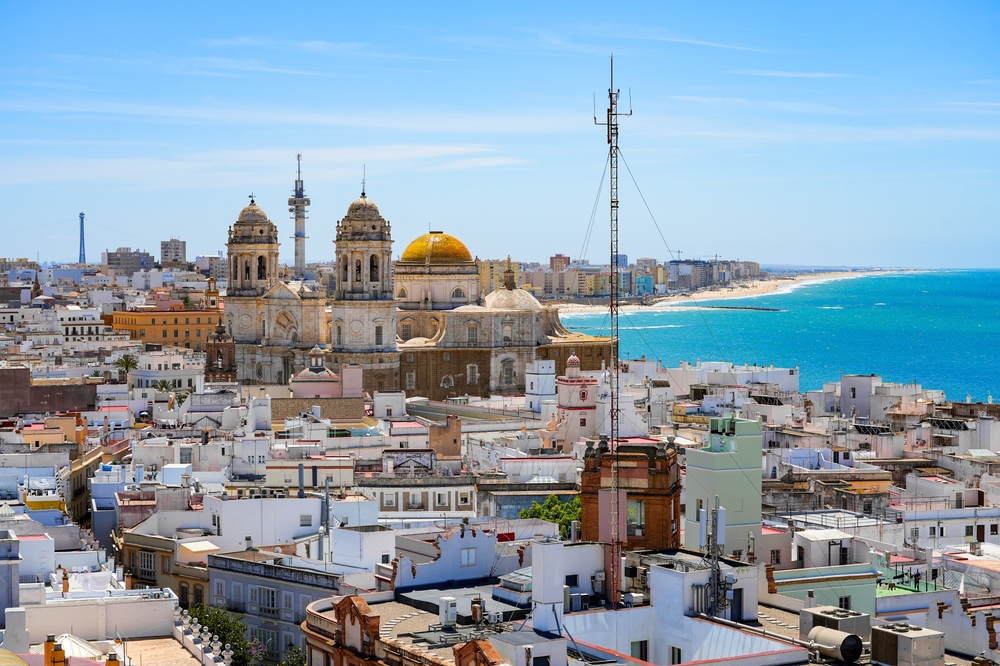
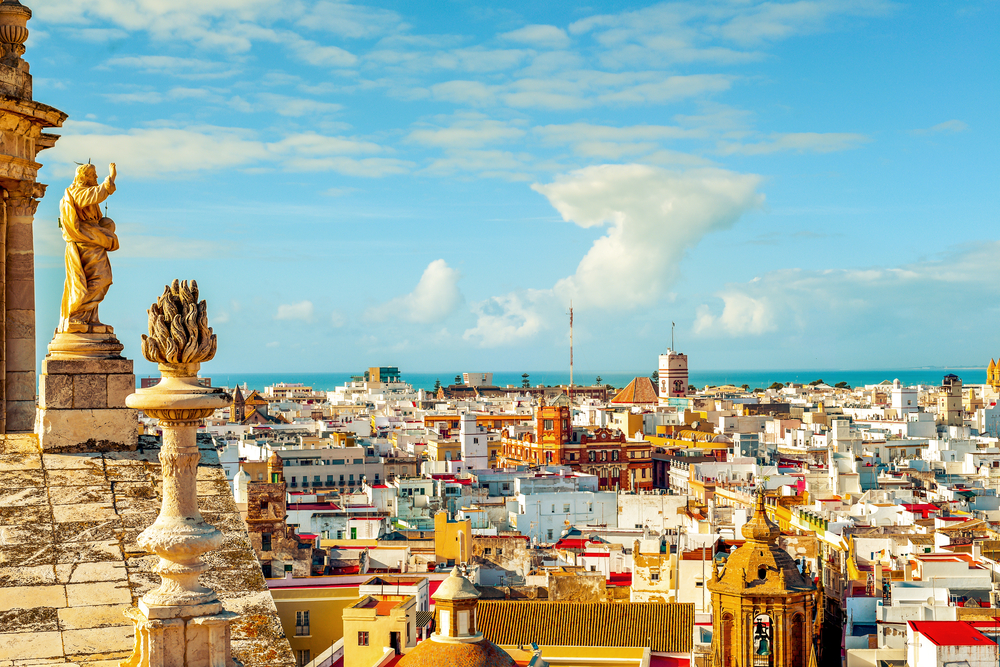
The Cathedral of Cádiz anchors any visit to the historic center. This monumental church, begun in 1722 and requiring more than a century to complete, blends baroque and neoclassical styles under its distinctive golden dome. Visitors can climb Torre de Poniente, the cathedral’s bell tower, for sweeping views across terracotta rooftops toward the Atlantic horizon.
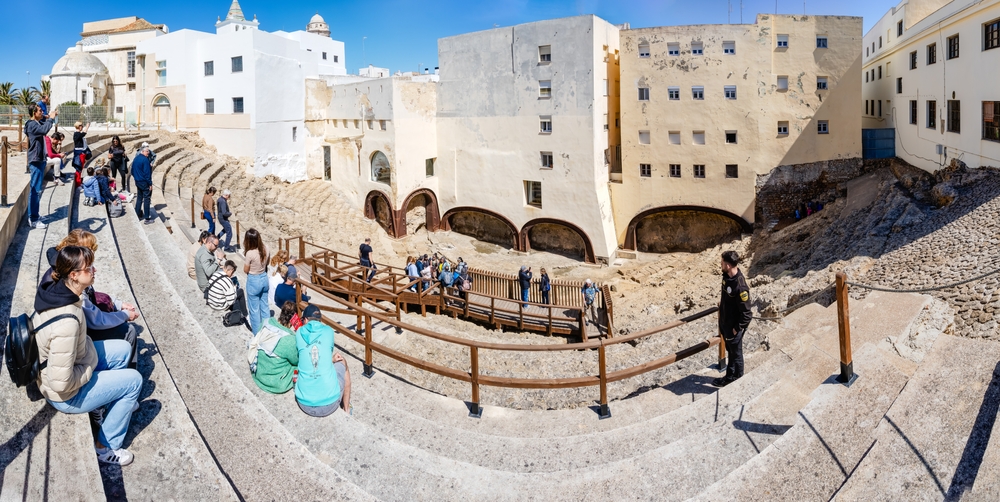
Just steps away, the Roman Theatre reveals Cádiz’s ancient origins. Discovered only in 1980 beneath residential buildings, this remarkably preserved structure dates to the first century BCE and once seated twenty thousand spectators, making it among the largest Roman theatres on the Iberian Peninsula. Guided tours contextualize the ruins within the broader Roman city that once occupied this site.

For panoramic perspectives, Torre Tavira stands as the highest point in the old town. This eighteenth-century watchtower houses a camera obscura that projects live images of the city onto a concave screen—a pre-photographic technology that surprises modern audiences. Guides manipulate the projected image to spotlight various landmarks while explaining Cádiz’s layout and history.
The beaches constitute another major draw. La Caleta, a small crescent of sand nestled between two historic fortresses, offers sheltered swimming within easy walking distance of the cathedral. For longer stretches, Playa de la Victoria extends several kilometers beyond the old town, providing Atlantic surf, beach bars, and space for the locals who flock here on summer evenings.
Cádiz expresses an emphatically Andalusian identity: exuberant, openly emotional, and deeply connected to flamenco traditions. The city’s most famous cultural expression arrives each February during Carnival, one of Spain’s most significant celebrations. For nearly two weeks, the city transforms into a massive street party featuring satirical musical groups, elaborate costumes, and competitions that draw participants and spectators from across Spain.

Daily life revolves around the neighborhood, or barrio. El Pópulo preserves the medieval core with labyrinthine streets barely wide enough for two people to pass. La Viña, the traditional fishermen’s quarter, becomes the Carnival epicenter and harbors numerous seafood taverns. Mentidero and Santa María represent historically working-class areas now experiencing gradual gentrification. These distinct neighborhoods maintain their own identities, with longtime residents gathering at the same corner bars, bakeries, and markets they’ve frequented for decades.
The old town’s small size means almost any accommodation provides easy walking access to major sites, restaurants, and beaches. For those seeking more space or lower prices, newer neighborhoods across the isthmus connecting Cádiz to the mainland offer additional hotel and apartment options, though these require buses or longer walks to reach the historic center.
Seafood dominates Cádiz’s culinary scene. The signature dish, pescaíto frito—an assortment of small fish lightly battered and fried—appears everywhere from upscale restaurants to humble neighborhood bars. Locals often buy it from specialized fried fish stands that serve the fried fish in paper cones for eating while walking.
Tortillitas de camarones represent another essential specialty: delicate, crispy fritters made from tiny shrimp and chickpea flour, unique to Cádiz and the surrounding province. The central Mercado Central showcases the daily catch alongside produce from Andalusia’s agricultural regions. For authentic experiences, visitors should explore the small bars and taverns in La Viña, where locals gather for glasses of manzanilla sherry and plates of boquerones (marinated anchovies), gambas al ajillo (garlic prawns), and local cheeses.
Cádiz lacks direct international connections, requiring most visitors to arrive via nearby Jerez de la Frontera. Jerez Airport serves flights from major European cities and connects to Madrid and Seville. Trains from Jerez reach Cádiz in approximately forty minutes, while trains from Seville take about ninety minutes. Bus services connect Cádiz to other Andalusian destinations, and some travelers incorporate the city into road trips along the Costa de la Luz.
In Cádiz, walking is the primary mode of transportation. Most visitors can traverse it entirely on foot. Local buses connect the historic center to beaches and newer neighborhoods, running frequently and inexpensively. Many visitors rent bicycles, particularly useful for reaching Playa de la Victoria and exploring the waterfront promenades.
No special health or safety precautions apply beyond standard European travel practices. Tap water is safe to drink, and the city maintains low crime rates. As a Spanish destination, Cádiz follows standard EU entry requirements, with specific visa and passport validity rules depending on citizenship. No regional restrictions or special documentation apply within Spain.
Seasonality dramatically affects the Cádiz experience. High season runs from July to August, when Spanish families take summer vacations, beaches reach capacity, and temperatures regularly exceed 30°C (86°F). Accommodations become scarce and expensive during these months.
February presents a special case: Carnival transforms the city for nearly two weeks, making it Spain’s most exuberant street celebration. This represents an extraordinary cultural experience but requires advance planning for accommodations and tolerance for crowds, noise, and limited restaurant availability, as many businesses close to participate in festivities.
Shoulder seasons—April through June and September through October—offer ideal visiting conditions. Temperatures remain comfortable for walking and beach activities, crowds have diminished significantly, and prices are down from peak levels. Spring brings particularly pleasant weather with long, sunny days and mild temperatures.
Winter constitutes the genuine low season. November through March sees cooler temperatures, occasional rain, and strong Atlantic winds. Some tourist-oriented establishments close, but the city continues functioning for its residents. Visitors during these months experience Cádiz at its most authentic, though should prepare for unpredictable weather and pack layers accordingly.
Cádiz rewards travelers seeking genuine urban life over manufactured tourist experiences—a rare Spanish coastal destination where the city’s soul remains intact and accessible.