




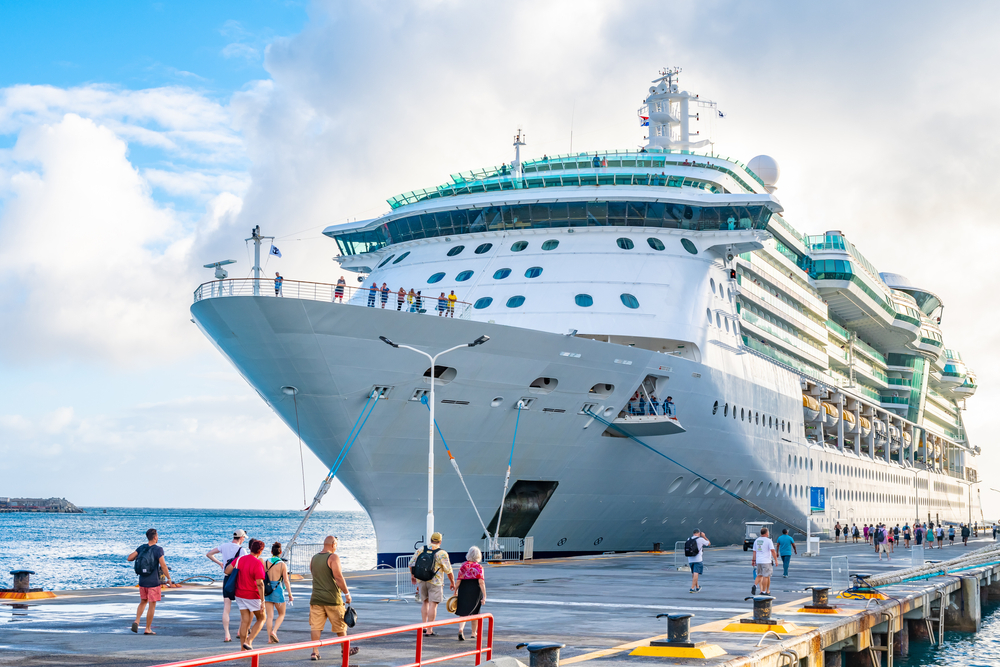
Since the 1970s, the Centers for Disease Control and Prevention has operated the Vessel Sanitation Program (VSP), one of the most quietly consequential public health initiatives. Under its authority, any cruise ship carrying 13 or more passengers on an international itinerary that stops at a U.S. port is subject to twice-yearly, unannounced sanitation inspections. No heads-up. No grace period. Just a team of trained environmental health officers stepping onto the gangway, clipboards in hand, ready to evaluate eight specific areas of the ship against a rigorous 100-point scale.
The VSP’s eight inspection areas read like a greatest hits list of everything that can go wrong when thousands of people live, eat, and swim together in a floating city. Inspectors scrutinize drinking water systems — taking actual samples to verify chlorine and pH levels. They descend on galleys and dining rooms, interviewing food service staff on safe handling practices and checking whether sick crew members have been kept away from food prep. They inspect swimming pools and hot tubs, review potable water charts and logs, examine housekeeping protocols, and evaluate the medical facilities to ensure staff understand outbreak reporting procedures. The final two areas cover integrated pest management and a general environmental review of public spaces.


Ships begin with a perfect score of 100, and inspectors deduct points based on the public health significance of each violation they find. An 86 or higher is a passing grade. Score an 85 or below, and the ship fails — triggering a mandatory reinspection and a required Corrective Action Statement detailing how every violation will be fixed. In extreme cases, such as an inability to properly chlorinate drinking water or keep food at safe temperatures, the CDC can recommend that the ship not sail at all.
In the past year, a select group of vessels earned the VSP’s equivalent of a gold star: a perfect 100. The list, published on a rolling 12-month basis directly on the CDC’s website, currently includes 24 ships, a diverse roster that spans everything from behemoth mainstream liners to intimate expedition vessels. Royal Caribbean’s Utopia of the Seas, the largest cruise ship in the world when it debuted in 2024, earned a 100 in July 2025, proof that sheer scale is no excuse for a messy kitchen. Viking Ocean Cruises placed three ships on the list (Viking Orion, Viking Neptune, and Viking Sea), underscoring a brand known for meticulous service. Disney Cruise Lines placed three ships as well, with the Disney Wish, Disney Magic, and the brand-new Disney Treasure all achieving the top mark.

Perhaps the most compelling data point in recent analysis: the age of a ship appears to have almost no bearing on its ability to score perfectly. Older vessels have matched newer ones point for point, suggesting that operational discipline matters far more than the vintage of the plumbing.
The VSP was created in direct response to a grim reality: cruise ships, with their dense populations, shared dining rooms, and recirculated water systems, are extraordinary incubators for gastrointestinal illness. Norovirus, in particular, has long been the villain of cruise ship headlines — and the VSP was designed to give it fewer places to hide. By auditing everything from the temperature at which food is stored to whether crew members report to their supervisor when they develop symptoms, the program attacks the problem from multiple angles simultaneously.
Inspections typically run six to eight hours, with teams of one to five officers depending on the ship’s size. At the end, inspectors sit down with ship management to walk through their findings — a debrief that, one imagines, can range from pleasant to excruciating depending on the score. Within two weeks, the cruise line receives the final report and must submit its corrective action plan. Every score, every report, and every corrective action statement is made available to the public on the VSP website. That transparency is the program’s real enforcement mechanism: passengers can look up their ship before they board.
Failing a VSP inspection does not necessarily mean a ship is filthy in the way that word conjures images of grimy cabins and moldy towels. Violations can involve documentation lapses, minor temperature deviations, or procedural gaps that are quickly corrected. Ships that have received failing grades in the recent past have subsequently bounced back with scores in the low 90s after addressing their deficiencies.
Still, the VSP database is a uniquely valuable consumer tool, and most travelers never use it. The CDC’s inspection query tool allows anyone to search by ship name, cruise line, or date — and the detailed reports break down exactly which areas cost points and how. For the pre-cruise researcher who already knows the departure gate, the stateroom category, and the shore excursion itinerary, adding a quick VSP score check is a logical final step. After all, knowing your ship earned a 100 makes the midnight buffet taste just a little bit better.