




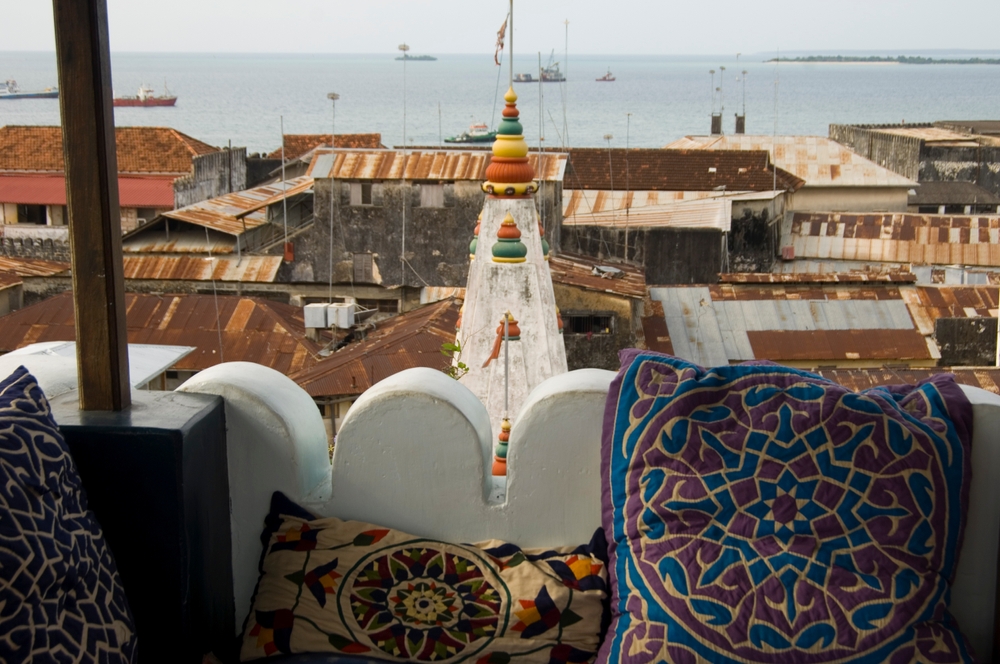
The dhow had barely cleared the harbor mouth when the smell of Zanzibar found me — cloves, salt, and something ancient I could not name. Stone Town materialized through the heat haze: whitewashed coral-rag buildings stacked improbably atop one another, their facades punched through with arched windows and the most extraordinary doors I had ever seen. It was 1990 and I was quite a bit younger, and travel was my first love.
I was staying at the Emerson & Green, and my room was nothing less than theatrical. High ceilings soared overhead, the plasterwork scrolled and worn. Wide, arched windows framed the rooftops and the shimmer of the Indian Ocean beyond. There were no glass panes, just carved shutters and open lattice that swung open to whatever breeze the island chose to offer. The heat was a living thing, but so was the air itself, thick with frangipani and the low rumble of the town going about its business below.
The crown jewel of the hotel was the Tower Top Restaurant — the Tea House, as the regulars called it. Open to the sky entirely, ringed only by a low parapet and the stars themselves, it was the kind of place that makes you question the usefulness of walls and ceilings. Each evening I climbed to it as the sun turned everything copper, and ate slowly while the muezzin’s call drifted up from the mosques of the medina. Beer and wine existed in Zanzibar, but this is a Muslim island. Alcohol was available, but approached with quiet discretion. The hotel served it, but you drank it gently, as a guest respects the customs of someone else’s house.

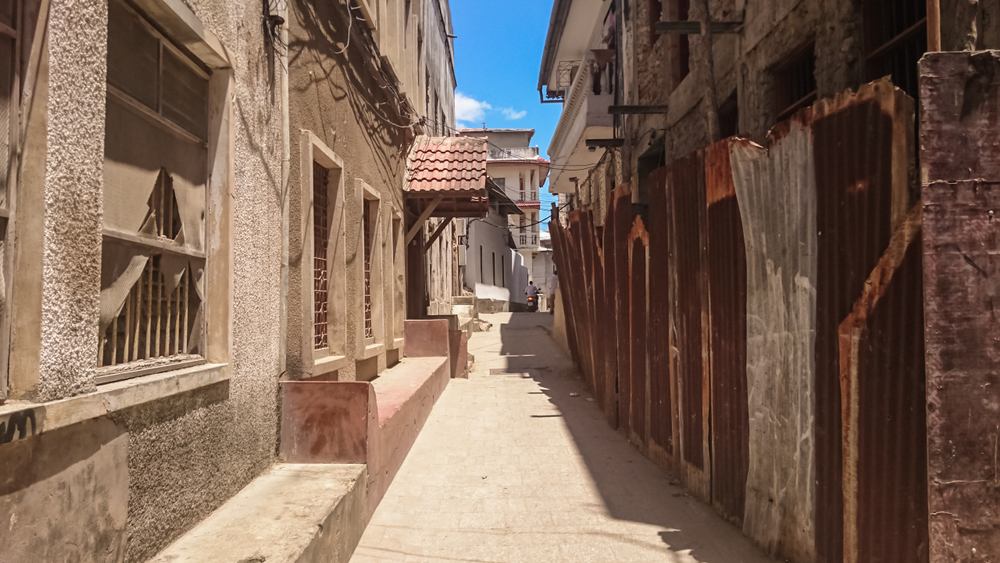
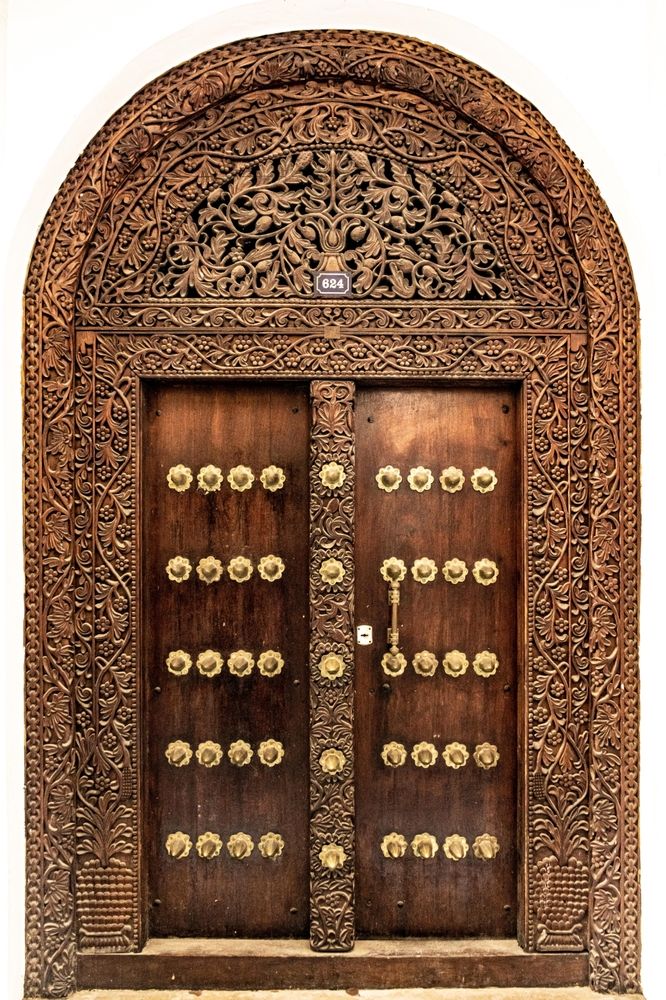
I walked through the narrow cobble stone streets of Stone Town. The doors on many of the buildings deserve their own mention of any story ever written about this place. They are not merely doors. They are declarations. The oldest and grandest are the Indian doors — massive, frames of teak, studded with rows of iron bosses said to have originated in the Gulf, where they discouraged war elephants from battering through gates. The Arab doors are arched, carved from floor to lintel in geometric flowers and Quranic script, their wood so dense it rings like bronze when you knock. Every household of ambition announced its wealth and lineage in carved wood. The more elaborate the door, the greater the merchant behind it. Walking those narrow lanes felt like reading a city’s biography in timber and iron.

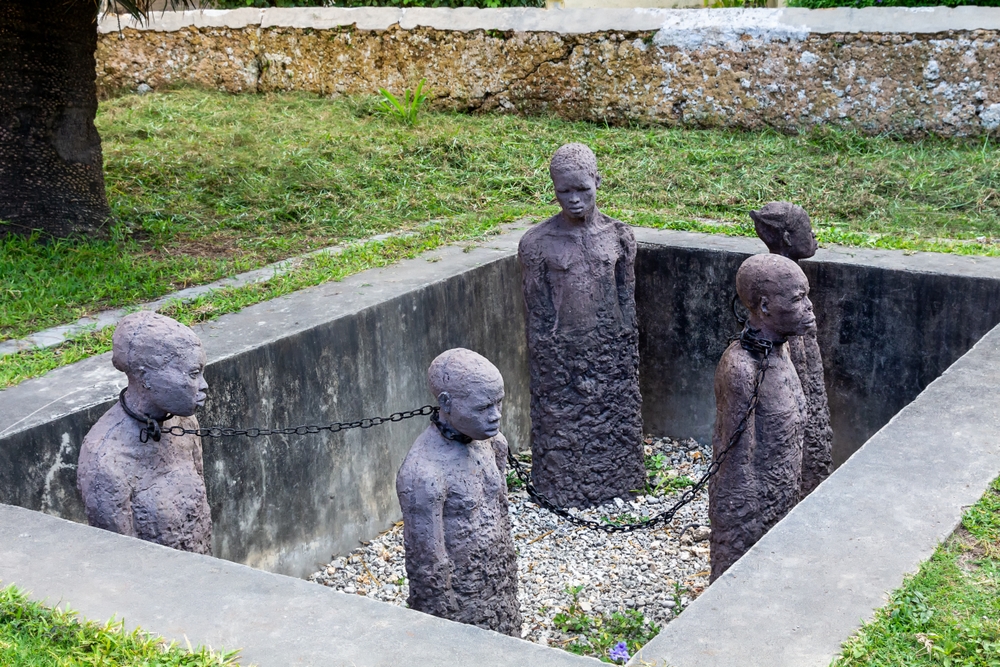
And then there was the history that the beauty could not entirely obscure. Zanzibar was, for centuries, the principal hub of the East African slave trade — the clearinghouse through which human beings captured from the interior of the continent were sold onward to Arab buyers, Persian Gulf ports, and Indian Ocean markets. The old slave market stands now as a memorial and museum, its underground holding chambers still intact: low-ceilinged stone rooms, airless and dark, where men, women and children were kept in conditions of deliberate brutality before auction. I stood in those chambers for a long time. The weight of it does not lift when you climb back into the sunlight. It follows you around the island for the rest of the week, sitting quietly beside all the beauty.

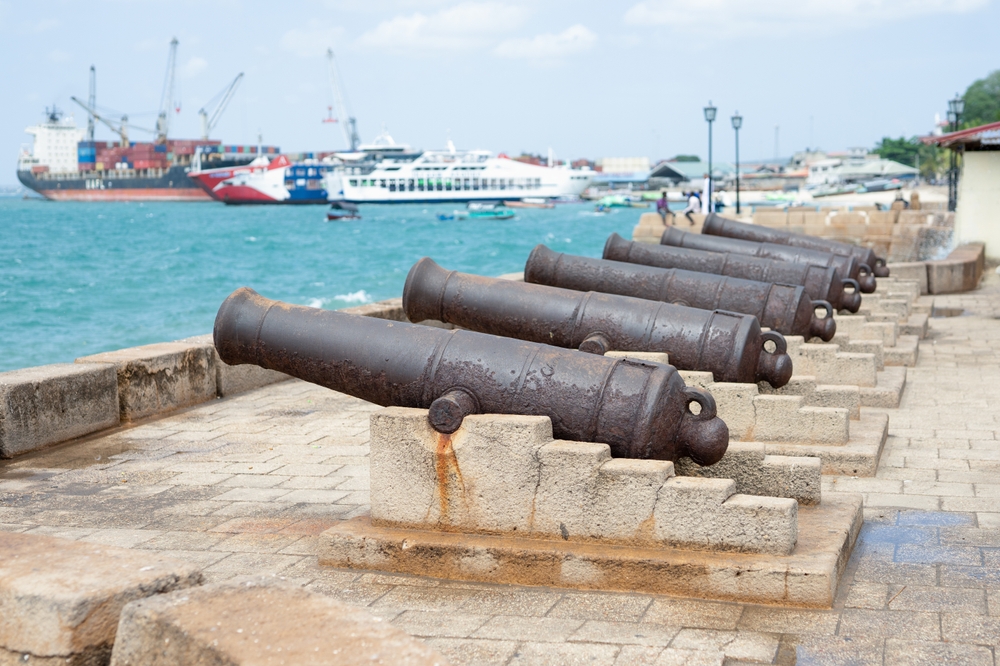
Every evening I walked the waterfront to the Forodhani Night Market, where the stalls materialized at dusk like a conjuring trick. Smoke rose from grills loaded with Zanzibar pizza — a thin, egg-filled street crepe folded around meat, cheese, and vegetables — and skewers of spiced octopus charred over coconut shell charcoal. There was urojo, the beloved Zanzibar mix: a tart, turmeric-yellow soup thickened with cassava and loaded with bhajias, boiled egg, and street snacks. Vendors pressed fresh sugarcane juice and squeezed lime soda into cups sweating with cold. I ate standing up, every night, watching the old harbor fill with dhows.

On my last morning, I woke and lay still in the high-ceilinged room while the island stirred. The shutters were open, and through them — in a sequence so precise it felt choreographed, the sounds arrived. First, a church bell, clean and measured, swinging somewhere close, probably from a cathedral a few lanes away. Then, riding over it, the muezzin beginning the Fajr call from the nearest minaret, his voice unhurried and enormous, the Arabic syllables stretching out across the rooftops like. And then, and a softer, underneath, barely there sound, a bell chiming from the Hindu temple below, a single, resonant tone. The three sounds braided together in the warm air above Stone Town and I lay there, absolutely still, not wanting to move and break the spell of whatever had just happened.
Some mornings, the world offers you something you cannot plan for and cannot repeat. That sound, the accidental harmony of three faiths waking together over one ancient island, was the most beautiful thing I heard all week, and one of the most beautiful things I have heard anywhere. The church bell faded first. Then the Hindu tone dissolved into the salt air. The muezzin’s call went on alone for a while, as it always has, rolling out across the coral rooftops, over the carved doors, above the harbor where the dhows rock at anchor, and out toward the open blue of the Indian Ocean.